Where's your hometown and where do you live currently?
The hometown question is an interesting one. I grew up in Fairfield County, Connecticut, 90 minutes from Manhattan but I have not lived there (until recently) in more than twenty‑five years, so I wouldn’t say it’s my hometown. I would probably say NYC. I lived there for two decades, with stints living in London and Berlin. I am currently in Stamford, Connecticut, about thirty minutes from where I grew up so I am still not back in my hometown despite moving back to my home state.
In a few sentences, describe what you do.
I help brands grow by uncovering growth opportunities they have yet to see. That means identifying future growth consumers who are often underserved or overlooked. With these diverse, growth consumers, we use insights to translate their cultural realities into strategic advantage. If a brand wants to stay ahead and stay relevant, it has to be ‘fluent in the language’ of the current majority—their culture, understand their lived experiences, what drives them, what differentiates them, and what unites them with the brand’s existing consumers. Cultural intelligence makes that possible.
How does a cultural intelligence center of excellence function day-to-day?
Think of a cultural intelligence center of excellence as the operating system behind the work. It runs in the background, syncing signals, setting the logic and enabling teams to move with clarity and cultural fluency.
I have teams working across clients and focused on the cultural dynamics, consumer behaviors and category specifics that matter most for that brand. This structure allows us to scale cultural intelligence while keeping the work deeply contextual and relevant.
How did you land in cultural intelligence?
I landed in cultural intelligence by following the future before I even had the language for it. My last semester of undergrad, I interned at Faith Popcorn’s BrainReserve, one of the original futurist consultancies. I worked on projects like the future of wellness, the future of adventure, future of value, future of Boomers, even abstract studies like the future of brown and green. I loved every part of it. They offered me a full‑time role before graduation, and that moment set the trajectory for everything that came next. Looking ahead has always been natural to me, and early on I realized that staying differentiated meant building a wide, deep toolkit.
I joined The Futures Company, now called Kantar Consulting, where I layered qualitative and quantitative skills onto my foresight foundation. After completing my Master’s, I needed a break and unexpectedly found myself freelancing. That “temporary” step lasted seven years and became its own education. I consulted across Fortune 500 clients and worked inside innovation agencies, research firms, semiotics shops, experiential agencies and branding and design studios. Every project expanded how I saw culture, how I decoded it and expanded and deepened my toolkit.
Eventually, I missed having a team and the rhythm of seeing work all the way through. I returned full‑time to build the Cultural Anthropology department at VaynerMedia. Then I went client‑side at Paramount Global to lead custom research and cultural intelligence thought leadership. I loved the work and the team and stayed for five years. But again, I felt the pull of the future and started asking what was next.
A recruiter eventually reached out about my current role, and it moved me closer to the vision I have been working toward for two decades. I want cultural intelligence to sit at the leadership level. I want organizations to treat culture as a strategic discipline, not a reaction. Ultimately, I am building toward the role of Chief Culture Officer, a term Grant McCracken introduced and even titled his book and one that I believe is overdue inside modern companies.
This entire path sharpened the discipline I lead today: connecting foresight, anthropology, strategy and behavior to help brands see what others miss.
What does it actually take for a brand to stay culturally relevant?
Most brands confuse cultural participation with cultural relevance. Posting on social media quickly in response to a trending topic, or going viral is table stakes. It does not make a brand culturally relevant. True relevance requires cultural intelligence at the foundation of brand building. Cultural intelligence means analyzing and anticipating human behavior so a brand can move confidently through the sociocultural climate. It is about understanding the role consumers want you to play in their lives and knowing how to add real value to their world, not just insert yourself into it. Again, delivering an emotional ROI.
How do you balance speed with depth when culture moves so fast?
It’s something that is definitely harder to do today than it was 20 years ago when I started. There was no social media back then! Balancing speed with depth starts by recognizing that culture is not just fast, it is overflowing. The challenge today is not velocity but volume. Trending culture moves in hyperdrive. The rise and fall of something like Demure happened so quickly that it became a perfect symbol of how accelerated the churn has become. I treat those moments as cultural data, but I never confuse speed with substance. Trends go viral because of human behavior, and human behavior does not evolve at the same pace. So I track the rapid signals, but I anchor my work in the slower forces that actually shape how people live, think, and buy.
You've built an "always-on" research and insights operation. What does always-on cultural intelligence look like in practice? How is that different from traditional insights or trend forecasting?
Always‑on cultural intelligence means treating the world as a live dataset. My team and I are constantly absorbing what people are reading, watching, eating, wearing, buying and talking about, then translating those signals into meaning for clients who often cannot see the cultural connections themselves. Whether I am in a supermarket or at a dinner party, I am collecting human and cultural insights.
My approach is fully multidisciplinary. It draws from anthropology, psychology, market research, brand strategy, trend forecasting, foresight, journalism, semiotics and linguistic analysis. I use all of these tools because understanding culture requires more than one method or one lens.
I have spent twenty years in trend forecasting, foresight and brand strategy, and more than fifteen conducting qualitative, quantitative and semiotics research. I also have a Master’s in Media Studies with a focus on cultural anthropology and research methods. I built this discipline intentionally, pulling from every field that helps me see the world differently and spot what others overlook. My goal is always the same: to find the negative space, the untold and often invisible stories that traditional insights oftentimes miss.
I build teams with intention. I hire for culture add, not culture fit. Culture fit produces homogeneity of thought, and homogeneity produces sameness. Sameness is the enemy of cultural intelligence. I want teams that expand our lens, not reinforce it.
I want divergent thinkers who expand our cultural intelligence ‘toolkit’ and keep us innovative. That is what makes always‑on intelligence more powerful than traditional insights or trend forecasting alone. It does not just track culture. It interprets it, interrogates it and turns it into competitive advantage.
What's a cultural shift or tension that brands are completely missing right now?
One of the biggest tensions brands are missing is the gap between the narrative about diversity and the reality of it. Diversity is not a trend or a political stance. It is the future of every market and every business. The noise around “pulling back” is just that: noise. The data continues to show that consumers do not see diversity as bad for business and that inclusive brands outperform those that ignore demographic and cultural shifts. Too many brands are reacting to the loudest voices instead of the most meaningful ones.
What’s one brand that gets cultural intelligence right?
Nike, Liquid Death and Duolingo consistently get cultural intelligence right for one simple reason. They know exactly who they are. Their cultural point of view is so defined that they can move in and out of different cultural spaces without losing credibility or coherence. That clarity gives them longevity. Most brands try to copy their moves instead of understanding the mindset behind them. These brands (Nike, Liquid Death, Duolingo) do not chase culture. They shape it.
How has teaching influenced the way you approach your work?
Teaching forces me to stay honest. My students at Parsons energize me and challenge me in ways that keep my work sharp. I learn from them just as much as they learn from me. Every class is essentially a living focus group that reveals fresh insights and reminds me to check my assumptions. Being in constant conversation with young people pulls me into their reality, not the one brands imagine they live in. It keeps my worldview elastic and my cultural intelligence grounded in what is actually happening, not what we think is happening.
Do you have rituals for staying culturally tuned in, or does it come naturally at this point?
Staying culturally tuned in is both instinct and discipline. After twenty years in this space, I begin every project with a set of hypotheses shaped by years of observing people, communities and industries. I test them, challenge them and rebuild them as I go. The one ritual I never break is spending at least an hour a day reading. Substacks, newsletters, feeds and anything that sparks curiosity. I let the trail take me where it wants because that is usually where the cultural signals are hiding.
What's your favorite offline source of cultural inspiration?
My favorite offline inspiration comes from being out in the world and paying attention. I learn the most from pop‑ups, supermarkets and art exhibits. When I travel, I spend an almost unreasonable amount of time in grocery stores studying the aisles, the packaging, the shoppers, the way people move and dress. Everyday spaces reveal more about culture than any report. That is where the real data lives.
What are the skills that make the biggest difference in your work?
Curiosity and humility are the two skills that matter most in my work. You have to be genuinely interested in the world and willing to learn from anyone. Every person carries a piece of cultural insight if you listen closely. The moment ego gets in the way, you stop seeing what is actually there.
What's a piece of feedback that still haunts you?
“Perception is reality” is the feedback that still sits with me. It forced me to confront the truth that the quality of the work is only one part of the equation. How the work is perceived, and how I am perceived, often carries more weight, even when that perception is subjective or a complete misperception.
It stays with me because it reminds me that cultural intelligence is not only outward facing. It also requires awareness of the narratives people create about you and the work. Those narratives can shape outcomes more than the work itself.
And as a triple minority, how my ideas are interpreted is influenced by me as the messenger. That reality shapes how I show up, how I communicate and how I anticipate the biases that may filter the message before it even lands.
What's a piece of advice that still fuels you?
Same answer as before: “Perception is reality” is the advice that still fuels me. It pushes me to bring clarity and intention to how my work, my teams and my ideas are understood. Every deck I write is a defense play, I call it “defense strategy”, building a deck that anticipates potential disconnects, questions, biases of my audience to prevent potential misperceptions. Managing perception is not about spin. It is about ensuring the story people receive aligns with the message you want to communicate.
What about the industry do you wish you knew starting out in your career?
I wish I had known that doing great work is not enough. Early on, I believed working towards excellence alone would carry me. “Let the work speak for itself.” But it took years to realize that plenty of “successful” people were not producing exceptional work. What they were exceptional at was positioning themselves and selling work that was average at best. The industry rewards visibility as much as it rewards craft. Understanding that earlier would have changed the way I navigated my own path.
Bonus Round
What do you listen to while working?
I used to work with music looping in the background, but not anymore. Now I need quiet to focus. Silence gives me the clarity to think, write and analyze without distraction.
What's your most creatively inspired time of day?
My creative peak used to be in the late evening, but that shifted with this role. Now my best ideas surface between 6am and 10am. I love that quiet stretch before emails start landing. It is the clearest mental space I get all day, and it is when the writing, analysis and pattern‑spotting all click together most naturally.
If you could make every brand do one thing differently when approaching culture, what would it be?
I would tell every brand to stop overestimating how much people think about them. When you approach culture, do it through the lens of your consumers, not your own preferences. I educate marketers, my colleagues and my students that your lived experience should inform the work but never shape the work. Too many marketers create work based on what they like or what their kids think is cool. That is not cultural intelligence. The truth is simple. We are never the consumer, and the moment a brand forgets that, it loses cultural relevance.
If you could ban one marketing phrase, what would it be?
I hesitated to bring this up earlier, but the term I would challenge is “culture.” I would not ban it, but I want people to use it with intention. We use it so flippantly that it loses its meaning and people don’t think critically about culture. Critical thinking is where cultural intelligence begins.
Instead of discarding it, I want us to operationalize it. Be specific. Which culture are we referring to? Whose culture? What community, what context, what codes? Language matters, and we need to make sure we are actually speaking the same language. We use the word “culture” far too often as shorthand for pop culture, and pop culture carries its own hierarchies and biases. When we collapse everything into that frame, we erase the nuance, depth and lived realities that true cultural intelligence requires.
Favorite personal mantra?
“Leave the door open for others.” I have had mentors, mostly women of color, who changed the trajectory of my career, and I see it as my responsibility to do the same for others. As I move into new opportunities, I make sure the door stays open so the people coming behind me can walk through with hopefully far less challenges or less of a learning curve than I experienced.
If you weren't in this industry, what would you be doing?
I would probably be a therapist. After finishing my Master’s, I was completely burnt out and seriously considered leaving the industry to go back to school for therapy. In many ways, I still do that work. I approach focus groups as therapy sessions. A big part of my job is helping clients process what they are seeing, feeling and fearing about the future. I listen, translate and guide them through the uncertainty. It is therapy, just in a different form.
Describe your approach to your work in three words.
Provocative, curious, experimentation
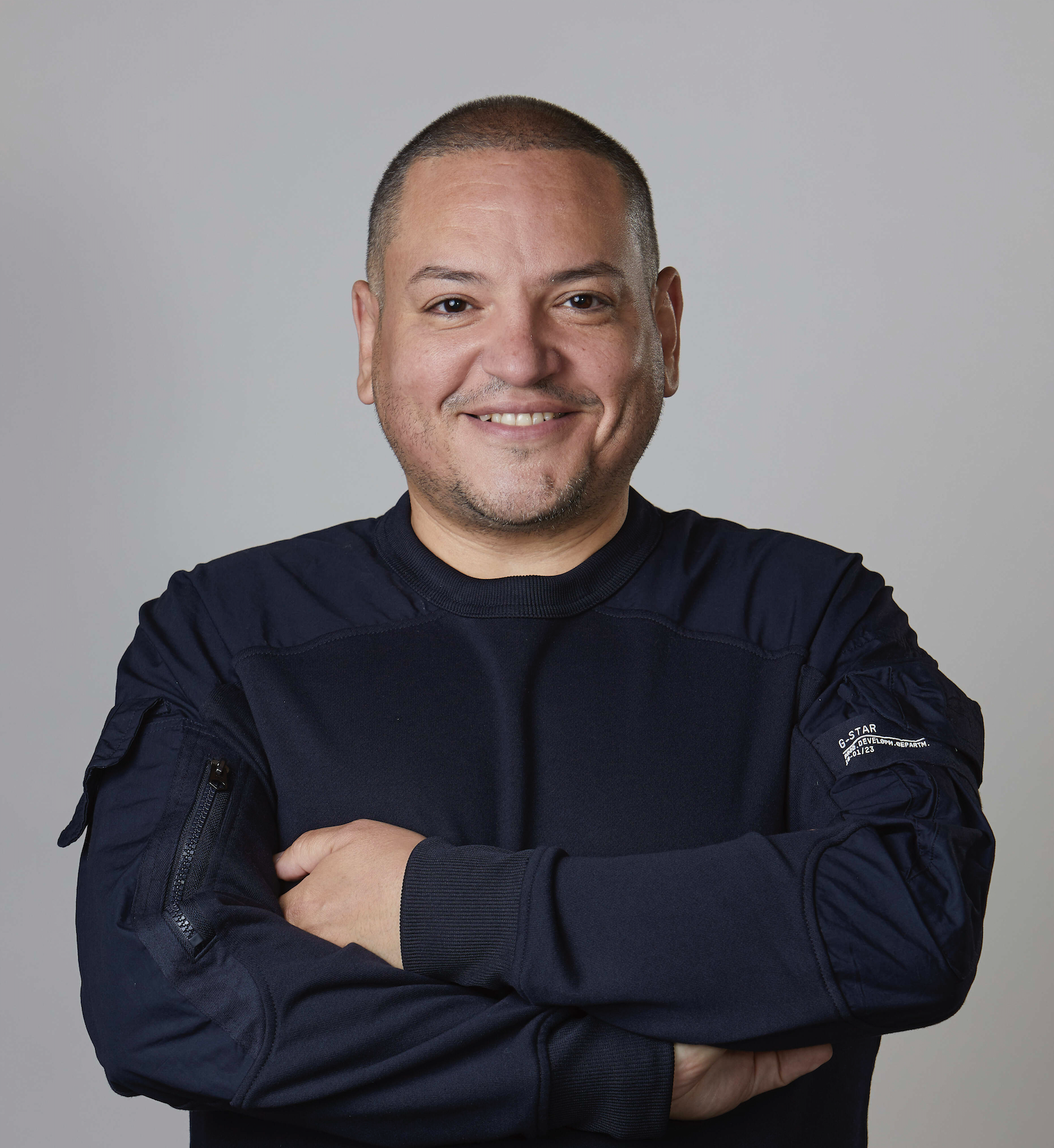
Angel Bellon is SVP, Head of Cultural Intelligence. He leads the Cultural Intelligence Hub, an always-on strategic insights engine, where his team identifies cultural whitespace to unlock growth for household brands. A hybrid strategist and cultural anthropologist, Angel transforms deep human insight into bold business growth. At Paramount Global, he led custom research and creative strategy to drive brand transformation. With a Master’s in Media Studies and 20 years decoding consumer behavior across the U.S., Europe, and Latin America, Angel is a sought-after speaker known for sparking “ah-ha” moments on culture, inclusivity, and innovation. He’s shared insights at Advertising Week, Future Festival, the United Nations, and the Department of Defense. A passionate advocate for equity, Angel teaches at Parsons and mentors the next generation of changemakers.
Where's your hometown and where do you live currently?
The hometown question is an interesting one. I grew up in Fairfield County, Connecticut, 90 minutes from Manhattan but I have not lived there (until recently) in more than twenty‑five years, so I wouldn’t say it’s my hometown. I would probably say NYC. I lived there for two decades, with stints living in London and Berlin. I am currently in Stamford, Connecticut, about thirty minutes from where I grew up so I am still not back in my hometown despite moving back to my home state.
In a few sentences, describe what you do.
I help brands grow by uncovering growth opportunities they have yet to see. That means identifying future growth consumers who are often underserved or overlooked. With these diverse, growth consumers, we use insights to translate their cultural realities into strategic advantage. If a brand wants to stay ahead and stay relevant, it has to be ‘fluent in the language’ of the current majority—their culture, understand their lived experiences, what drives them, what differentiates them, and what unites them with the brand’s existing consumers. Cultural intelligence makes that possible.
How does a cultural intelligence center of excellence function day-to-day?
Think of a cultural intelligence center of excellence as the operating system behind the work. It runs in the background, syncing signals, setting the logic and enabling teams to move with clarity and cultural fluency.
I have teams working across clients and focused on the cultural dynamics, consumer behaviors and category specifics that matter most for that brand. This structure allows us to scale cultural intelligence while keeping the work deeply contextual and relevant.
How did you land in cultural intelligence?
I landed in cultural intelligence by following the future before I even had the language for it. My last semester of undergrad, I interned at Faith Popcorn’s BrainReserve, one of the original futurist consultancies. I worked on projects like the future of wellness, the future of adventure, future of value, future of Boomers, even abstract studies like the future of brown and green. I loved every part of it. They offered me a full‑time role before graduation, and that moment set the trajectory for everything that came next. Looking ahead has always been natural to me, and early on I realized that staying differentiated meant building a wide, deep toolkit.
I joined The Futures Company, now called Kantar Consulting, where I layered qualitative and quantitative skills onto my foresight foundation. After completing my Master’s, I needed a break and unexpectedly found myself freelancing. That “temporary” step lasted seven years and became its own education. I consulted across Fortune 500 clients and worked inside innovation agencies, research firms, semiotics shops, experiential agencies and branding and design studios. Every project expanded how I saw culture, how I decoded it and expanded and deepened my toolkit.
Eventually, I missed having a team and the rhythm of seeing work all the way through. I returned full‑time to build the Cultural Anthropology department at VaynerMedia. Then I went client‑side at Paramount Global to lead custom research and cultural intelligence thought leadership. I loved the work and the team and stayed for five years. But again, I felt the pull of the future and started asking what was next.
A recruiter eventually reached out about my current role, and it moved me closer to the vision I have been working toward for two decades. I want cultural intelligence to sit at the leadership level. I want organizations to treat culture as a strategic discipline, not a reaction. Ultimately, I am building toward the role of Chief Culture Officer, a term Grant McCracken introduced and even titled his book and one that I believe is overdue inside modern companies.
This entire path sharpened the discipline I lead today: connecting foresight, anthropology, strategy and behavior to help brands see what others miss.
What does it actually take for a brand to stay culturally relevant?
Most brands confuse cultural participation with cultural relevance. Posting on social media quickly in response to a trending topic, or going viral is table stakes. It does not make a brand culturally relevant. True relevance requires cultural intelligence at the foundation of brand building. Cultural intelligence means analyzing and anticipating human behavior so a brand can move confidently through the sociocultural climate. It is about understanding the role consumers want you to play in their lives and knowing how to add real value to their world, not just insert yourself into it. Again, delivering an emotional ROI.
How do you balance speed with depth when culture moves so fast?
It’s something that is definitely harder to do today than it was 20 years ago when I started. There was no social media back then! Balancing speed with depth starts by recognizing that culture is not just fast, it is overflowing. The challenge today is not velocity but volume. Trending culture moves in hyperdrive. The rise and fall of something like Demure happened so quickly that it became a perfect symbol of how accelerated the churn has become. I treat those moments as cultural data, but I never confuse speed with substance. Trends go viral because of human behavior, and human behavior does not evolve at the same pace. So I track the rapid signals, but I anchor my work in the slower forces that actually shape how people live, think, and buy.
You've built an "always-on" research and insights operation. What does always-on cultural intelligence look like in practice? How is that different from traditional insights or trend forecasting?
Always‑on cultural intelligence means treating the world as a live dataset. My team and I are constantly absorbing what people are reading, watching, eating, wearing, buying and talking about, then translating those signals into meaning for clients who often cannot see the cultural connections themselves. Whether I am in a supermarket or at a dinner party, I am collecting human and cultural insights.
My approach is fully multidisciplinary. It draws from anthropology, psychology, market research, brand strategy, trend forecasting, foresight, journalism, semiotics and linguistic analysis. I use all of these tools because understanding culture requires more than one method or one lens.
I have spent twenty years in trend forecasting, foresight and brand strategy, and more than fifteen conducting qualitative, quantitative and semiotics research. I also have a Master’s in Media Studies with a focus on cultural anthropology and research methods. I built this discipline intentionally, pulling from every field that helps me see the world differently and spot what others overlook. My goal is always the same: to find the negative space, the untold and often invisible stories that traditional insights oftentimes miss.
I build teams with intention. I hire for culture add, not culture fit. Culture fit produces homogeneity of thought, and homogeneity produces sameness. Sameness is the enemy of cultural intelligence. I want teams that expand our lens, not reinforce it.
I want divergent thinkers who expand our cultural intelligence ‘toolkit’ and keep us innovative. That is what makes always‑on intelligence more powerful than traditional insights or trend forecasting alone. It does not just track culture. It interprets it, interrogates it and turns it into competitive advantage.
What's a cultural shift or tension that brands are completely missing right now?
One of the biggest tensions brands are missing is the gap between the narrative about diversity and the reality of it. Diversity is not a trend or a political stance. It is the future of every market and every business. The noise around “pulling back” is just that: noise. The data continues to show that consumers do not see diversity as bad for business and that inclusive brands outperform those that ignore demographic and cultural shifts. Too many brands are reacting to the loudest voices instead of the most meaningful ones.
What’s one brand that gets cultural intelligence right?
Nike, Liquid Death and Duolingo consistently get cultural intelligence right for one simple reason. They know exactly who they are. Their cultural point of view is so defined that they can move in and out of different cultural spaces without losing credibility or coherence. That clarity gives them longevity. Most brands try to copy their moves instead of understanding the mindset behind them. These brands (Nike, Liquid Death, Duolingo) do not chase culture. They shape it.
How has teaching influenced the way you approach your work?
Teaching forces me to stay honest. My students at Parsons energize me and challenge me in ways that keep my work sharp. I learn from them just as much as they learn from me. Every class is essentially a living focus group that reveals fresh insights and reminds me to check my assumptions. Being in constant conversation with young people pulls me into their reality, not the one brands imagine they live in. It keeps my worldview elastic and my cultural intelligence grounded in what is actually happening, not what we think is happening.
Do you have rituals for staying culturally tuned in, or does it come naturally at this point?
Staying culturally tuned in is both instinct and discipline. After twenty years in this space, I begin every project with a set of hypotheses shaped by years of observing people, communities and industries. I test them, challenge them and rebuild them as I go. The one ritual I never break is spending at least an hour a day reading. Substacks, newsletters, feeds and anything that sparks curiosity. I let the trail take me where it wants because that is usually where the cultural signals are hiding.
What's your favorite offline source of cultural inspiration?
My favorite offline inspiration comes from being out in the world and paying attention. I learn the most from pop‑ups, supermarkets and art exhibits. When I travel, I spend an almost unreasonable amount of time in grocery stores studying the aisles, the packaging, the shoppers, the way people move and dress. Everyday spaces reveal more about culture than any report. That is where the real data lives.
What are the skills that make the biggest difference in your work?
Curiosity and humility are the two skills that matter most in my work. You have to be genuinely interested in the world and willing to learn from anyone. Every person carries a piece of cultural insight if you listen closely. The moment ego gets in the way, you stop seeing what is actually there.
What's a piece of feedback that still haunts you?
“Perception is reality” is the feedback that still sits with me. It forced me to confront the truth that the quality of the work is only one part of the equation. How the work is perceived, and how I am perceived, often carries more weight, even when that perception is subjective or a complete misperception.
It stays with me because it reminds me that cultural intelligence is not only outward facing. It also requires awareness of the narratives people create about you and the work. Those narratives can shape outcomes more than the work itself.
And as a triple minority, how my ideas are interpreted is influenced by me as the messenger. That reality shapes how I show up, how I communicate and how I anticipate the biases that may filter the message before it even lands.
What's a piece of advice that still fuels you?
Same answer as before: “Perception is reality” is the advice that still fuels me. It pushes me to bring clarity and intention to how my work, my teams and my ideas are understood. Every deck I write is a defense play, I call it “defense strategy”, building a deck that anticipates potential disconnects, questions, biases of my audience to prevent potential misperceptions. Managing perception is not about spin. It is about ensuring the story people receive aligns with the message you want to communicate.
What about the industry do you wish you knew starting out in your career?
I wish I had known that doing great work is not enough. Early on, I believed working towards excellence alone would carry me. “Let the work speak for itself.” But it took years to realize that plenty of “successful” people were not producing exceptional work. What they were exceptional at was positioning themselves and selling work that was average at best. The industry rewards visibility as much as it rewards craft. Understanding that earlier would have changed the way I navigated my own path.
Bonus Round
What do you listen to while working?
I used to work with music looping in the background, but not anymore. Now I need quiet to focus. Silence gives me the clarity to think, write and analyze without distraction.
What's your most creatively inspired time of day?
My creative peak used to be in the late evening, but that shifted with this role. Now my best ideas surface between 6am and 10am. I love that quiet stretch before emails start landing. It is the clearest mental space I get all day, and it is when the writing, analysis and pattern‑spotting all click together most naturally.
If you could make every brand do one thing differently when approaching culture, what would it be?
I would tell every brand to stop overestimating how much people think about them. When you approach culture, do it through the lens of your consumers, not your own preferences. I educate marketers, my colleagues and my students that your lived experience should inform the work but never shape the work. Too many marketers create work based on what they like or what their kids think is cool. That is not cultural intelligence. The truth is simple. We are never the consumer, and the moment a brand forgets that, it loses cultural relevance.
If you could ban one marketing phrase, what would it be?
I hesitated to bring this up earlier, but the term I would challenge is “culture.” I would not ban it, but I want people to use it with intention. We use it so flippantly that it loses its meaning and people don’t think critically about culture. Critical thinking is where cultural intelligence begins.
Instead of discarding it, I want us to operationalize it. Be specific. Which culture are we referring to? Whose culture? What community, what context, what codes? Language matters, and we need to make sure we are actually speaking the same language. We use the word “culture” far too often as shorthand for pop culture, and pop culture carries its own hierarchies and biases. When we collapse everything into that frame, we erase the nuance, depth and lived realities that true cultural intelligence requires.
Favorite personal mantra?
“Leave the door open for others.” I have had mentors, mostly women of color, who changed the trajectory of my career, and I see it as my responsibility to do the same for others. As I move into new opportunities, I make sure the door stays open so the people coming behind me can walk through with hopefully far less challenges or less of a learning curve than I experienced.
If you weren't in this industry, what would you be doing?
I would probably be a therapist. After finishing my Master’s, I was completely burnt out and seriously considered leaving the industry to go back to school for therapy. In many ways, I still do that work. I approach focus groups as therapy sessions. A big part of my job is helping clients process what they are seeing, feeling and fearing about the future. I listen, translate and guide them through the uncertainty. It is therapy, just in a different form.
Describe your approach to your work in three words.
Provocative, curious, experimentation
Angel Bellon is SVP, Head of Cultural Intelligence. He leads the Cultural Intelligence Hub, an always-on strategic insights engine, where his team identifies cultural whitespace to unlock growth for household brands. A hybrid strategist and cultural anthropologist, Angel transforms deep human insight into bold business growth. At Paramount Global, he led custom research and creative strategy to drive brand transformation. With a Master’s in Media Studies and 20 years decoding consumer behavior across the U.S., Europe, and Latin America, Angel is a sought-after speaker known for sparking “ah-ha” moments on culture, inclusivity, and innovation. He’s shared insights at Advertising Week, Future Festival, the United Nations, and the Department of Defense. A passionate advocate for equity, Angel teaches at Parsons and mentors the next generation of changemakers.
Further Reading
%202.jpg)