I never thought my party trick would be telling people that I live in a commune. But I’ve stopped resisting the inevitable because people are fascinated by it.
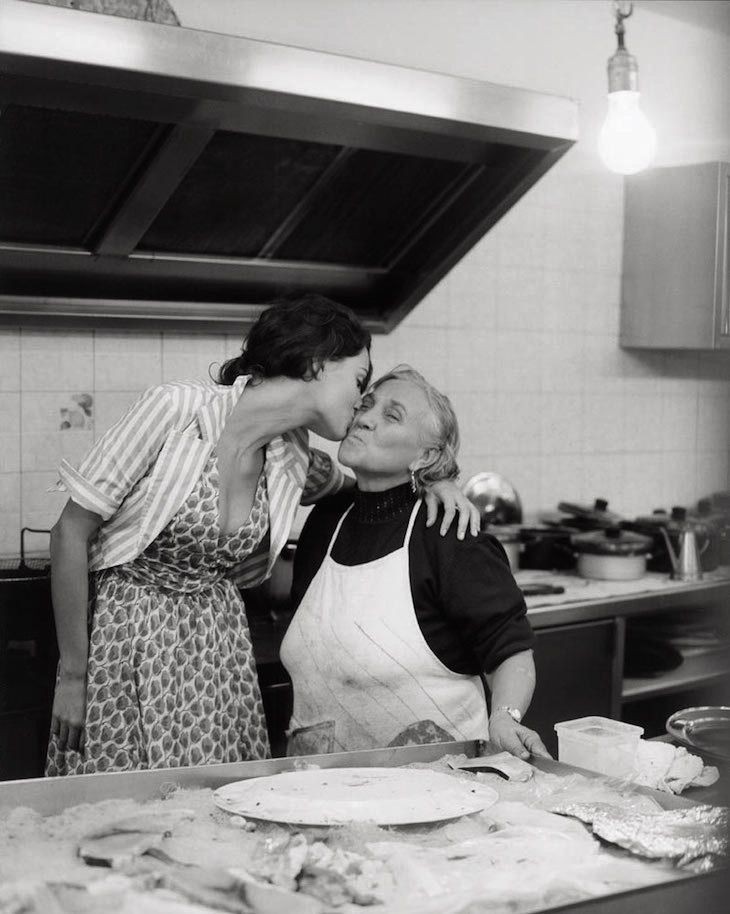
For the last four years, my husband and I have lived at the “Radish” in Oakland, California. It’s a mix of friends and friends-of-friends all living on the same block. It’s grown to be 20 adults, plus eight kids under four. As more houses next door to the original property were bought or rented, we knocked down fences to create a big shared backyard. There’s a standalone ADU with a chef’s kitchen where the residents rotate cooking for the group and for friends who come by. That means instead of asking myself what I should cook for the three of us every night, I cook a Thanksgiving-sized meal for twenty people once a month. It also means there’s dinner ready for me at 7:30pm every night if I want it. The consistency of this ritual is the anchor of most of my days.
People have a lot of assumptions about the kind of person that wants to live like this, and I think we probably break a lot of them. In my mind, that’s a great thing. Meeting people who appear to be “like you” who are making different, experimental decisions about the way they live their lives is a great reminder of free will. There are a lot of things we accept as default that make our lives harder than they need to be (especially as young-ish professionals and parents), and that are worth questioning.
Meeting people who appear to be “like you” who are making different, experimental decisions about the way they live their lives is a great reminder of free will.
Here are some examples. My family doesn’t nanny-share with a family a car ride away; we nanny-share with my friends’ baby in the downstairs apartment of our duplex. When my husband and I spontaneously go on a date night, there are always multiple friends who volunteer to keep an eye on our baby monitor and be there in a pinch if our one-year old happens to wake up. I already mentioned not needing to think about what to feed my family for dinner every night. And instead of every social interaction being a meal planned weeks in advance at an expensive restaurant, I can peek out my kitchen window to see who’s having a drink in the backyard and pop over for a low-pressure ten minute hang (or linger for hours if I feel like it!)
If you’re a 30+ American like me, dear reader, then I’m sure you know how unusual all of this is. My husband and I feel lucky, and most people think it’s awesome. But honestly, our current lifestyle is more than worth the side-eye we occasionally get when talking about our set up. The most common reaction from those people is, But there must be so much conflict! Then I have to disappoint them. There isn’t.
We’ve done a good job of making sure the people who move in are kind, conscientious, willing to help out, and generous about giving the benefit of the doubt. These are behavioral norms that can be protected with a good upfront process. Just like companies that know how to hire well, we know that strong references are a good idea, that spending time together is the only way to understand each other, and that the vibe fit matters. A lot.
The easefulness is also a result of the unspoken norms that are reinforced by the people who live here:
We don’t do “chore charts” or tell people what the group’s expectations are of them. None of us think that’s the right incentive structure. Instead, we celebrate when we see people contributing in whatever ways they like to. We encourage bragging in the group thread (I took out the trash bins! I fixed the shed lock! I cleaned up the backyard! I baked banana bread!) so people get credit for being awesome.
We’re friendly and welcoming by default. Invited guests can rummage in the communal fridge for ice cream, and no one will sarcastically quip at them to please leave some Half Baked for everyone else. We introduce ourselves by default, because we won’t know everyone in the backyard all the time. But we also respect people’s private conversations and individual friendships. It’s harder to explain how those boundaries are recognized, which I think is a tell. Unspoken norms require people to pick up patterns and read the room. That’s part of how this all works. But also? Even though it doesn’t work perfectly, it’s kind of amazing how easy it all is if you don’t expect absolute perfection.
Why do these things matter? Because they’re evidence of the subtle frictions that naturally occur when living in close proximity to other people, and how easily they can be managed by being, well, neighborly. These are the kind of muscles that people who don’t spend time in close communities have less of an opportunity to flex. A lot of these things are akin to college dorm stuff, just with fifteen extra years of personal growth and experience under our belts. So I guess it makes sense that people tend to expect drama. Their most recent reference might literally be university.
Radish just happens to be where I practice these dynamics and ways of being. But the underlying questions—What kind of culture do you want to be a part of, and how might it shape you?—belong to everyone.
There’s a big trend on social media to say that everyone wants a village, but no one wants to be a villager, and I think there’s some truth to that. But being a villager doesn’t mean sacrificing yourself at the altar of generosity. It does mean being more generous than might feel natural: with your smile, about letting go of a small annoyance, when you recognize that the comment someone made surely wasn’t intended that way. As a recovering perfectionist, these have been particularly important lessons for me. I’ve learned a lot from how this community operates, and it’s made life much easier for me in general.
We are products of our culture: but that’s not just the media we consume and the country where we were born. It’s where we work, where we live, our families, our friend groups. I heard someone recently say that she was surprised when someone in her new workplace wrote in an email, “In what world would we do [that]?” It struck her as rude and inflammatory. In some cultures, it might be. But in others, it might be the water they swim in, and therefore no big deal. What this means to me is that we have more choice over who we are, what we think, and what we decide is normal than we imagine.
We have more choice over who we are, what we think, and what we decide is normal than we imagine.
When we spend time with ambitious people, we push harder. When we spend time with kind people, we soften. When we spend time with people who complain a lot, we’ll probably complain more. So what culture, and what community, do you want to become a part of? What change can you be that you wish to see? How might you want to be changed?
You definitely don't need to live in a commune to start making these kinds of choices with more intention. But maybe it helps to know that someone does, and the impact it’s had.
BIO
Gina is a lifelong brand builder and principal at Nimble, a strategic brand studio based in Atlanta & San Francisco. Previously, she co-founded Dipsea, the audio erotica app that The New Yorker says created “a genre of its own,” which is a line she’ll make sure ends up on her tombstone. Gina has given a TED Talk about sex & imagination, and writes about social design on her Substack, Hear Say.
I never thought my party trick would be telling people that I live in a commune. But I’ve stopped resisting the inevitable because people are fascinated by it.
For the last four years, my husband and I have lived at the “Radish” in Oakland, California. It’s a mix of friends and friends-of-friends all living on the same block. It’s grown to be 20 adults, plus eight kids under four. As more houses next door to the original property were bought or rented, we knocked down fences to create a big shared backyard. There’s a standalone ADU with a chef’s kitchen where the residents rotate cooking for the group and for friends who come by. That means instead of asking myself what I should cook for the three of us every night, I cook a Thanksgiving-sized meal for twenty people once a month. It also means there’s dinner ready for me at 7:30pm every night if I want it. The consistency of this ritual is the anchor of most of my days.
People have a lot of assumptions about the kind of person that wants to live like this, and I think we probably break a lot of them. In my mind, that’s a great thing. Meeting people who appear to be “like you” who are making different, experimental decisions about the way they live their lives is a great reminder of free will. There are a lot of things we accept as default that make our lives harder than they need to be (especially as young-ish professionals and parents), and that are worth questioning.
Meeting people who appear to be “like you” who are making different, experimental decisions about the way they live their lives is a great reminder of free will.
Here are some examples. My family doesn’t nanny-share with a family a car ride away; we nanny-share with my friends’ baby in the downstairs apartment of our duplex. When my husband and I spontaneously go on a date night, there are always multiple friends who volunteer to keep an eye on our baby monitor and be there in a pinch if our one-year old happens to wake up. I already mentioned not needing to think about what to feed my family for dinner every night. And instead of every social interaction being a meal planned weeks in advance at an expensive restaurant, I can peek out my kitchen window to see who’s having a drink in the backyard and pop over for a low-pressure ten minute hang (or linger for hours if I feel like it!)
If you’re a 30+ American like me, dear reader, then I’m sure you know how unusual all of this is. My husband and I feel lucky, and most people think it’s awesome. But honestly, our current lifestyle is more than worth the side-eye we occasionally get when talking about our set up. The most common reaction from those people is, But there must be so much conflict! Then I have to disappoint them. There isn’t.
We’ve done a good job of making sure the people who move in are kind, conscientious, willing to help out, and generous about giving the benefit of the doubt. These are behavioral norms that can be protected with a good upfront process. Just like companies that know how to hire well, we know that strong references are a good idea, that spending time together is the only way to understand each other, and that the vibe fit matters. A lot.
The easefulness is also a result of the unspoken norms that are reinforced by the people who live here:
We don’t do “chore charts” or tell people what the group’s expectations are of them. None of us think that’s the right incentive structure. Instead, we celebrate when we see people contributing in whatever ways they like to. We encourage bragging in the group thread (I took out the trash bins! I fixed the shed lock! I cleaned up the backyard! I baked banana bread!) so people get credit for being awesome.
We’re friendly and welcoming by default. Invited guests can rummage in the communal fridge for ice cream, and no one will sarcastically quip at them to please leave some Half Baked for everyone else. We introduce ourselves by default, because we won’t know everyone in the backyard all the time. But we also respect people’s private conversations and individual friendships. It’s harder to explain how those boundaries are recognized, which I think is a tell. Unspoken norms require people to pick up patterns and read the room. That’s part of how this all works. But also? Even though it doesn’t work perfectly, it’s kind of amazing how easy it all is if you don’t expect absolute perfection.
Why do these things matter? Because they’re evidence of the subtle frictions that naturally occur when living in close proximity to other people, and how easily they can be managed by being, well, neighborly. These are the kind of muscles that people who don’t spend time in close communities have less of an opportunity to flex. A lot of these things are akin to college dorm stuff, just with fifteen extra years of personal growth and experience under our belts. So I guess it makes sense that people tend to expect drama. Their most recent reference might literally be university.
Radish just happens to be where I practice these dynamics and ways of being. But the underlying questions—What kind of culture do you want to be a part of, and how might it shape you?—belong to everyone.
There’s a big trend on social media to say that everyone wants a village, but no one wants to be a villager, and I think there’s some truth to that. But being a villager doesn’t mean sacrificing yourself at the altar of generosity. It does mean being more generous than might feel natural: with your smile, about letting go of a small annoyance, when you recognize that the comment someone made surely wasn’t intended that way. As a recovering perfectionist, these have been particularly important lessons for me. I’ve learned a lot from how this community operates, and it’s made life much easier for me in general.
We are products of our culture: but that’s not just the media we consume and the country where we were born. It’s where we work, where we live, our families, our friend groups. I heard someone recently say that she was surprised when someone in her new workplace wrote in an email, “In what world would we do [that]?” It struck her as rude and inflammatory. In some cultures, it might be. But in others, it might be the water they swim in, and therefore no big deal. What this means to me is that we have more choice over who we are, what we think, and what we decide is normal than we imagine.
We have more choice over who we are, what we think, and what we decide is normal than we imagine.
When we spend time with ambitious people, we push harder. When we spend time with kind people, we soften. When we spend time with people who complain a lot, we’ll probably complain more. So what culture, and what community, do you want to become a part of? What change can you be that you wish to see? How might you want to be changed?
You definitely don't need to live in a commune to start making these kinds of choices with more intention. But maybe it helps to know that someone does, and the impact it’s had.
BIO
Gina is a lifelong brand builder and principal at Nimble, a strategic brand studio based in Atlanta & San Francisco. Previously, she co-founded Dipsea, the audio erotica app that The New Yorker says created “a genre of its own,” which is a line she’ll make sure ends up on her tombstone. Gina has given a TED Talk about sex & imagination, and writes about social design on her Substack, Hear Say.


