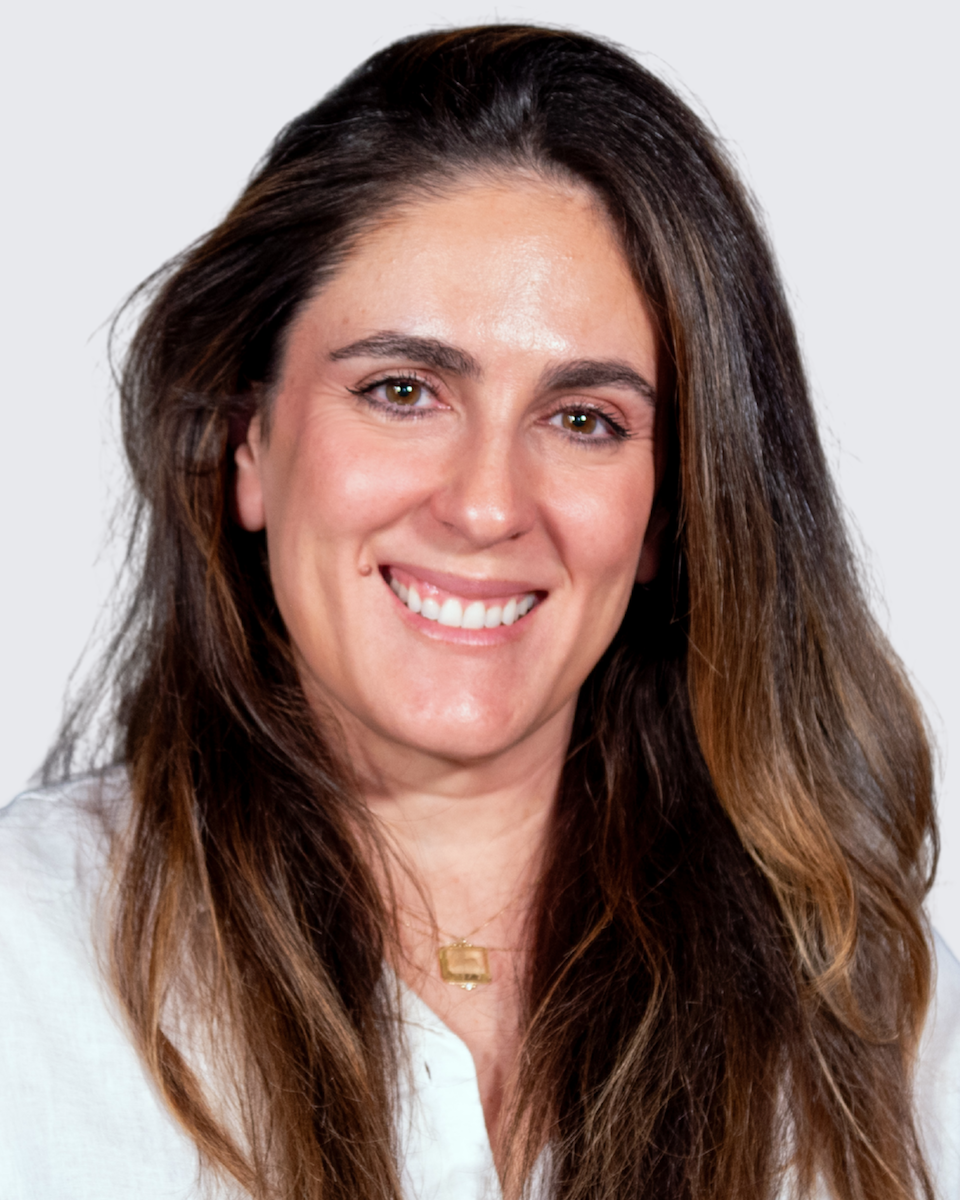
In our first recorded Subtext interview, we talk with cultural futurist Jasmine Bina about what it actually takes to build community that endures. I've admired Jasmine's ability to consistently put new ideas and provocations out to the public and cultivate meaningful conversations around them. She has a seemingly endless well of knowledge about culture and psychology, and to boot, she's one of the most generous folks I've met in this industry. It was lovely to sit down with her and dig into what makes it all work. This interview was edited for length and clarity - you can watch the full interview on YouTube here.
Let’s start by talking about what you do? I know you run two businesses—Concept Bureau and Exposure Therapy. Tell us a little about both.
Concept Bureau is our strategy agency. I'm a cultural futurist. We work with brands, organizations, leaders, movements—whoever wants to move the needle of culture to win over their markets or speak to their audiences. Most people find us through our writing. We're constantly forecasting the future of culture and helping clients make decisions based on those forecasts.
As we published more, we noticed there are a lot of people interested in the cultural zeitgeist and the way we think about it. Interestingly, even at the biggest companies, there aren't people they can talk to about this stuff. After sitting on the idea for a while, we launched Exposure Therapy—a community that's very programmed, high touch, fun, and immersive. It's all about studying culture and where the future is headed, while growing you as a professional and thinker.
The whole promise of Exposure Therapy is exposure for your strategic mind and therapy for your creative soul. We learned that you can't just be intellectual about learning. You have to be creative and learn with your whole body, your soul. We try to feed all those parts of our members. It's been a dream job to build.
I can say as a member that it feels fun, but you can feel the rigor that goes into the programming and the intention behind it. How long has Exposure Therapy been running?
Two and a half years. We launched in February 2022. I'm glad you feel that balance. It evolved after we launched. When we started getting creative directors, writers, therapists, coaches, social media people—though the majority is still strategists, brand builders, and executives—we realized there are so many other modes of learning we should be tapping into.
How did you get into strategy and futurism? Was there a moment where you knew this was what you needed to be doing, or was it a more natural progression?
I rarely have those moments in real time. I look back and realize I switched gears, but everything I've done is very organic and iterative. The one talent I have is learning to swallow my pride and put things out there—shipping early, or constantly shipping. For me, it was being willing to think in public.
Most of my career, I was speaking on stages or writing about something before I was hired to do it. I wasn't waiting for permission. I had thoughts about things and started writing on Medium early on. I wrote an article about new luxury during the Kanye era—just an idea I had. Nobody was paying me to think about that, and we were doing straight brand strategy work then. But I loved writing about it, and I always wrote about what I was thinking about, which was maybe a few steps ahead of my work. That's how we developed our reputation.
Same with Exposure Therapy. I would write and publish, and get more thoughtful, long emails from people who clearly wanted to engage with these topics but had nowhere to do it. That became unsustainable. My partner said we should start a community. I was resistant at first—community is hard, especially virtual community—but we finally launched it. It was just a website of promises in the beginning, which is what every community is. Then you spend that first year delivering on those promises month after month. It was a hard learning curve, but then it got easier and became more play than anything else.
I love that you didn't wait for permission. So many people relate to waiting for someone to give them permission to have a perspective or weigh in on a topic. Not waiting for that is a page we should all take from your book.
I still deal with that. I do public speaking and love the stages I've been on, but I find myself still waiting to be invited. No one’s immune to it. No matter what you accomplish, most of us are still waiting for permission. It's really important to be conscious of that. I'm still waiting as much as I did in the beginning and have to correct that all the time.
That's real. I've heard you say that the reason people join Exposure Therapy isn't the reason they stay. How have you navigated that? How do you shift to understand what brings people in and then unfold the community to make them want to stay?
I hand pick everybody who comes here. I do all the interviews and choose who's invited because we talk about really provocative topics. I want to expose you to the edges. You're not going to like everything you hear here. We don't bring in shit starters, but you will be challenged. We have a lot of people with strong opinions loosely held, which is what I'm looking for.
The reason people join isn't the reason they stay because initially they think they're coming for one thing—maybe they want to learn what's happening in culture or understand the future. But they stay because they meet their people. They feel seen. They feel like they can think freely. And they develop real friendships. That's the thing that's kept them around.
So yes, I hand pick for intellectual curiosity and the ability to hold strong opinions loosely, but also for emotional intelligence and the capacity for empathy. Because if you don't have those two things, you're not going to land well in a community that's also about therapy for your creative soul. You need people who can think and feel.
One thing that strikes me about you and your work is that you seem to have a real clarity on what you believe and what you stand for, but you also maintain this openness and curiosity. How do you hold both of those things?
That's a great question. I think it's the difference between conviction and certainty. I have strong convictions about things—about culture, about what I believe is true about human nature, about what's happening in the world. But I don't have certainty about the details or how it all plays out.
So I can be very firm in my belief that, for example, we're in a cultural moment of deep fragmentation and that people are craving belonging and meaning. I'm pretty convinced of that. But how that plays out in a particular brand or culture or region? I stay curious about that. I'm willing to be wrong about the details while holding firm to what I think the deeper truth is.
I think that's what we try to model in Exposure Therapy too. We have strong perspectives on culture, but we bring in people who challenge those perspectives or see things differently. Because the goal isn't to be right. The goal is to understand culture more deeply and help our clients navigate it more effectively.
That's a really important distinction. Conviction without certainty. I think that's something a lot of strategists struggle with because there's pressure to have all the answers.
Absolutely. And I think that pressure is misplaced. Strategy is not about knowing the future. It's about understanding the present deeply enough that you can make bets on what comes next. And if you think you know for certain what the future holds, you're probably not thinking deeply enough about the complexity of how culture and business and human behavior actually work.
The best strategic thinkers I know are the ones who are most curious and most willing to say "I don't know." That gives you permission to go deeper. That gives you permission to ask better questions. And it makes you a better partner to your clients because they feel like you're genuinely trying to solve their problem rather than just applying a predetermined solution.
You've touched on a lot of what I wanted to ask about around community building and the work you do. Let me ask you a fun question. What's your dream client brief? It doesn't have to be a specific brand, but what kind of brief do you want to get in your inbox?
We recently got one that excites me. I can't share too much, but it's in another culture and region of the world. That region is experiencing a transfer of wealth to young people, huge optimism, and an awakening toward national and cultural values away from the Western standard. That's exciting because you could describe America as the opposite right now—low optimism, concentration of wealth, and, you know, some people call it the decline of an empire. Others call it a fissure in our history where maybe we'll come out the other side with renewed strength and optimism. But that's a whole other mental stew.
I'd love more work like that. I'd like to brand a country. It's surprising how many people get to do that kind of work—actual national level stuff. We never have. I love working with "boring" clients—clients in boring industries—because they're way more willing to do the hard work of building the brand over the long term. But I think I'd like to tackle some really big cultural challenges. There's so much changing around the world. I'd like to do more work outside of here.
Do you feel like being an outsider to an industry is an advantage? Because I've found in my career that the outsider perspective can be huge, but it has to be seen that way.
That's what I've always loved about our work—you get to change what you're doing every few months and dive in. What's interesting after doing this for so many years is realizing that there are core truths that never change. Everything's kind of collapsing down to those things, no matter where you are in the world. Finding that version in other territories is exciting to me.
I'm always drawn to people and anything that lets you get deeper into people or be exposed to new people or immerse yourself in people who can teach you something or open your worldview. That's exciting. Being an outsider helps because we study culture, and culture isn't trends. Trends sit on top of culture, but culture is something much deeper.
There aren't that many expressions of humanity or what the great human project is or what the modern project is. Underneath it all, there's a lot of consistency. That's kind of healing to see.
Last question. If you weren't doing the amazing work with Concept Bureau and Exposure Therapy, what's an alternate universe Jasmine doing?
I do wonder if I have different acts in my life. I wish I could write fiction. I don't know if I could be a good fiction writer, but later in life I'd like to do something closer to death—being a death doula or birth doula. I want to see if I could confront that. There's something very real that happens there. I'm not religious, but it would be as close to a religious experience as I could get.
We were just talking to someone about trip sitting, which is probably similar—sitting with somebody during an ego death. And then children. I think I'm going to have to do something that benefits children to die with any kind of moral consistency. I can handle most of what I see, but I cannot handle what's happening to kids. So I think I need to commit part of my life to serving children.
Well, I imagine you're going to do all of them because you're you.
I hope so.
About Jasmine
Jasmine Bina is a cultural futurist and strategist shaping the way brands and leaders anticipate what’s next. She's the founder of Concept Bureau, a research and strategy studio, and the co-founder of Exposure Therapy, a members-only community for the culturally curious. Find her on LinkedIn, Substack and TikTok.
In our first recorded Subtext interview, we talk with cultural futurist Jasmine Bina about what it actually takes to build community that endures. I've admired Jasmine's ability to consistently put new ideas and provocations out to the public and cultivate meaningful conversations around them. She has a seemingly endless well of knowledge about culture and psychology, and to boot, she's one of the most generous folks I've met in this industry. It was lovely to sit down with her and dig into what makes it all work. This interview was edited for length and clarity - you can watch the full interview on YouTube here.
Let’s start by talking about what you do? I know you run two businesses—Concept Bureau and Exposure Therapy. Tell us a little about both.
Concept Bureau is our strategy agency. I'm a cultural futurist. We work with brands, organizations, leaders, movements—whoever wants to move the needle of culture to win over their markets or speak to their audiences. Most people find us through our writing. We're constantly forecasting the future of culture and helping clients make decisions based on those forecasts.
As we published more, we noticed there are a lot of people interested in the cultural zeitgeist and the way we think about it. Interestingly, even at the biggest companies, there aren't people they can talk to about this stuff. After sitting on the idea for a while, we launched Exposure Therapy—a community that's very programmed, high touch, fun, and immersive. It's all about studying culture and where the future is headed, while growing you as a professional and thinker.
The whole promise of Exposure Therapy is exposure for your strategic mind and therapy for your creative soul. We learned that you can't just be intellectual about learning. You have to be creative and learn with your whole body, your soul. We try to feed all those parts of our members. It's been a dream job to build.
I can say as a member that it feels fun, but you can feel the rigor that goes into the programming and the intention behind it. How long has Exposure Therapy been running?
Two and a half years. We launched in February 2022. I'm glad you feel that balance. It evolved after we launched. When we started getting creative directors, writers, therapists, coaches, social media people—though the majority is still strategists, brand builders, and executives—we realized there are so many other modes of learning we should be tapping into.
How did you get into strategy and futurism? Was there a moment where you knew this was what you needed to be doing, or was it a more natural progression?
I rarely have those moments in real time. I look back and realize I switched gears, but everything I've done is very organic and iterative. The one talent I have is learning to swallow my pride and put things out there—shipping early, or constantly shipping. For me, it was being willing to think in public.
Most of my career, I was speaking on stages or writing about something before I was hired to do it. I wasn't waiting for permission. I had thoughts about things and started writing on Medium early on. I wrote an article about new luxury during the Kanye era—just an idea I had. Nobody was paying me to think about that, and we were doing straight brand strategy work then. But I loved writing about it, and I always wrote about what I was thinking about, which was maybe a few steps ahead of my work. That's how we developed our reputation.
Same with Exposure Therapy. I would write and publish, and get more thoughtful, long emails from people who clearly wanted to engage with these topics but had nowhere to do it. That became unsustainable. My partner said we should start a community. I was resistant at first—community is hard, especially virtual community—but we finally launched it. It was just a website of promises in the beginning, which is what every community is. Then you spend that first year delivering on those promises month after month. It was a hard learning curve, but then it got easier and became more play than anything else.
I love that you didn't wait for permission. So many people relate to waiting for someone to give them permission to have a perspective or weigh in on a topic. Not waiting for that is a page we should all take from your book.
I still deal with that. I do public speaking and love the stages I've been on, but I find myself still waiting to be invited. No one’s immune to it. No matter what you accomplish, most of us are still waiting for permission. It's really important to be conscious of that. I'm still waiting as much as I did in the beginning and have to correct that all the time.
That's real. I've heard you say that the reason people join Exposure Therapy isn't the reason they stay. How have you navigated that? How do you shift to understand what brings people in and then unfold the community to make them want to stay?
I hand pick everybody who comes here. I do all the interviews and choose who's invited because we talk about really provocative topics. I want to expose you to the edges. You're not going to like everything you hear here. We don't bring in shit starters, but you will be challenged. We have a lot of people with strong opinions loosely held, which is what I'm looking for.
The reason people join isn't the reason they stay because initially they think they're coming for one thing—maybe they want to learn what's happening in culture or understand the future. But they stay because they meet their people. They feel seen. They feel like they can think freely. And they develop real friendships. That's the thing that's kept them around.
So yes, I hand pick for intellectual curiosity and the ability to hold strong opinions loosely, but also for emotional intelligence and the capacity for empathy. Because if you don't have those two things, you're not going to land well in a community that's also about therapy for your creative soul. You need people who can think and feel.
One thing that strikes me about you and your work is that you seem to have a real clarity on what you believe and what you stand for, but you also maintain this openness and curiosity. How do you hold both of those things?
That's a great question. I think it's the difference between conviction and certainty. I have strong convictions about things—about culture, about what I believe is true about human nature, about what's happening in the world. But I don't have certainty about the details or how it all plays out.
So I can be very firm in my belief that, for example, we're in a cultural moment of deep fragmentation and that people are craving belonging and meaning. I'm pretty convinced of that. But how that plays out in a particular brand or culture or region? I stay curious about that. I'm willing to be wrong about the details while holding firm to what I think the deeper truth is.
I think that's what we try to model in Exposure Therapy too. We have strong perspectives on culture, but we bring in people who challenge those perspectives or see things differently. Because the goal isn't to be right. The goal is to understand culture more deeply and help our clients navigate it more effectively.
That's a really important distinction. Conviction without certainty. I think that's something a lot of strategists struggle with because there's pressure to have all the answers.
Absolutely. And I think that pressure is misplaced. Strategy is not about knowing the future. It's about understanding the present deeply enough that you can make bets on what comes next. And if you think you know for certain what the future holds, you're probably not thinking deeply enough about the complexity of how culture and business and human behavior actually work.
The best strategic thinkers I know are the ones who are most curious and most willing to say "I don't know." That gives you permission to go deeper. That gives you permission to ask better questions. And it makes you a better partner to your clients because they feel like you're genuinely trying to solve their problem rather than just applying a predetermined solution.
You've touched on a lot of what I wanted to ask about around community building and the work you do. Let me ask you a fun question. What's your dream client brief? It doesn't have to be a specific brand, but what kind of brief do you want to get in your inbox?
We recently got one that excites me. I can't share too much, but it's in another culture and region of the world. That region is experiencing a transfer of wealth to young people, huge optimism, and an awakening toward national and cultural values away from the Western standard. That's exciting because you could describe America as the opposite right now—low optimism, concentration of wealth, and, you know, some people call it the decline of an empire. Others call it a fissure in our history where maybe we'll come out the other side with renewed strength and optimism. But that's a whole other mental stew.
I'd love more work like that. I'd like to brand a country. It's surprising how many people get to do that kind of work—actual national level stuff. We never have. I love working with "boring" clients—clients in boring industries—because they're way more willing to do the hard work of building the brand over the long term. But I think I'd like to tackle some really big cultural challenges. There's so much changing around the world. I'd like to do more work outside of here.
Do you feel like being an outsider to an industry is an advantage? Because I've found in my career that the outsider perspective can be huge, but it has to be seen that way.
That's what I've always loved about our work—you get to change what you're doing every few months and dive in. What's interesting after doing this for so many years is realizing that there are core truths that never change. Everything's kind of collapsing down to those things, no matter where you are in the world. Finding that version in other territories is exciting to me.
I'm always drawn to people and anything that lets you get deeper into people or be exposed to new people or immerse yourself in people who can teach you something or open your worldview. That's exciting. Being an outsider helps because we study culture, and culture isn't trends. Trends sit on top of culture, but culture is something much deeper.
There aren't that many expressions of humanity or what the great human project is or what the modern project is. Underneath it all, there's a lot of consistency. That's kind of healing to see.
Last question. If you weren't doing the amazing work with Concept Bureau and Exposure Therapy, what's an alternate universe Jasmine doing?
I do wonder if I have different acts in my life. I wish I could write fiction. I don't know if I could be a good fiction writer, but later in life I'd like to do something closer to death—being a death doula or birth doula. I want to see if I could confront that. There's something very real that happens there. I'm not religious, but it would be as close to a religious experience as I could get.
We were just talking to someone about trip sitting, which is probably similar—sitting with somebody during an ego death. And then children. I think I'm going to have to do something that benefits children to die with any kind of moral consistency. I can handle most of what I see, but I cannot handle what's happening to kids. So I think I need to commit part of my life to serving children.
Well, I imagine you're going to do all of them because you're you.
I hope so.
About Jasmine
Jasmine Bina is a cultural futurist and strategist shaping the way brands and leaders anticipate what’s next. She's the founder of Concept Bureau, a research and strategy studio, and the co-founder of Exposure Therapy, a members-only community for the culturally curious. Find her on LinkedIn, Substack and TikTok.
Further Reading
.png)