What led you to start Plume, and what does your role look like in practice today?
I started my career at Condé Nast, and during those six years working across different media outlets, I was also approached by brands to help with copywriting and storytelling. Around that time, I began paying more attention to the texts I would see in shop windows or at art fairs. Often, I found myself thinking, “This could be expressed differently.”
In fashion and lifestyle publications, the setting was always extremely important—the photography, the set design—while the text often remained a small caption-like accompaniment. At the same time, you had brands like Acne Studios publishing Acne Papers, a heavyweight print publication dedicated to culture in the broadest sense. I found that incredibly inspiring. They were paying real attention to detail and giving people something meaningful to engage with.
I started Plume to offer brands or even regular people my experience gained from working within large publishing houses. I wanted to create an alternative to big advertising agencies—a studio focused specifically on storytelling, tone of voice, and writing. I began small, and it gradually grew over time.
As an editorial director at Plume, I supervise every project. I edit the work, challenge it, and participate in every brainstorm, until we reach the moment where everything clicks.
To anyone who’s experiencing a creative block, what are the things they can do to overcome it?
Sometimes the work ticks all the boxes, but the feeling just isn’t there. If redoing it or trying another approach doesn’t work, we just leave the office. Try going to a library and working from there to rewire your brain.
From launching entire publications to producing documentaries and podcasts for brands, many of your projects extend beyond traditional channels. What does editorial writing allow that classical branding sometimes flattens? Where do you see the biggest tension or opportunity between the two?
That’s a big question. What I find interesting about editorial work is that, strangely enough, it gives us a lot of freedom. Unlike design, where you can reference images or build a mood board to explain the direction, storytelling is harder to pin down visually. Even our clients tend to rely on similar references because they rarely pay close attention to the texts themselves. They might say they love Hermès storytelling or mention Monoprix (French supermarket chain) for its bold and cheeky tone.
Because of that ambiguity, we’re given a lot of space. We take the brief, try to understand what the brand really needs—the emotion, the intention, the goal they want to reach—and from there we can propose something that might not be what they initially expected, but that ultimately works.
Moving into freer forms of expression is very important for us. When we create brand voice guidelines, for instance, we try to move away from strategy language and instead use real examples. Sometimes it’s a video or an audio recording of someone speaking. It’s much easier to grasp a voice when you can hear it in your head than when you’re asked to imagine a fictional brand persona. Who is this person? She’s a woman, she’s forty, she lives in a big city… She doesn’t exist!
Another reality is that the CMOs and teams inside these companies change frequently. So if we want people to engage with what we’re creating, we need to tap into their emotions as well. What we write matters, of course, but the way we deliver it to the people who will actually use it is just as important.
In the end, we try to give brands the kinds of tools we wished we had when we were working with editorial guidelines ourselves. We really try to make their in-house teams excited. Even brand guidelines need to have a story to stick.
You’ve managed and worked with teams of writers. What tip would you give to new writers working on a brand story or manifesto?
I’d say, try to set a scene. Think back to your last summer. What were you doing? Who was the friend you called the most? What were you talking about? Forget about the brand, think of your personal life—the last time you were happy, the last smell you remember, the last dish you cooked that you liked. Then take this emotion to bring substance to your writing.
You mentioned delving into the archives of Au Départ (a suitcase company) to produce a collection of texts presenting its history, essence, and trajectory. How do you approach historical material? Do you tend to preserve, reinterpret, or challenge it?
Au Départ is a historic French luxury trunkmaker founded in 1834, often mentioned alongside Louis Vuitton, Goyard, and Moynat as one of the great Parisian luggage houses. It was a pioneer of trunk-making, but the company closed in the 1950s. Its belongings were auctioned off, and the archives were lost, so by the time we were invited to work on the rebrand, we were essentially dealing with a missing history.
In many ways, they had no clear roots left to rely on. They asked us to help them understand who they were so we could also imagine where they might go next. The design team began rebuilding a small collection of original suitcases by sourcing pieces at auctions. One of the first discoveries was that a trunk had belonged to Antoine de Saint-Exupéry, the author of The Little Prince.
From there, we started looking beyond the brand itself and into the wider cultural context of the time. We turned to history books, but also literature from that era, to understand what travel meant when the world was opening up through the first railway networks. What were people discussing? What were they debating in cafés? Writers like Émile Zola helped us grasp the spirit of the time.
The company didn’t even have a sense of a brand. The logo was changing on every suitcase, depending on who was signing it! Everything was custom-made, and they were the first to include a protective locker. At the end, we decided to present a body of research where we laid out some possibilities for understanding their identity. We wrote a brand narrative that speaks of their hands-on nature while keeping the pioneering spirit alive. It became a roadmap for future positioning and for writing a new chapter.
In your work with Polène, you created the Off Screen documentary series, which tells the stories of the artisans behind their handmade leather goods through their own eyes. What was that experience like, and do you want to do more work like this in the future?
First of all, winning the trust of these people was no small task. Speaking in front of a camera can be intimidating. These artisans often live in the same villages their families have lived in for generations, so the idea of being filmed—and of talking about their personal story, not just their craft—was quite stressful for them.
To make the process easier, we created the initial setup. The first step was to work with a Spanish journalist who was local to the region. She knew the villages and the culture, which helped create trust from the beginning.
Our intention was to make a film about craftsmanship that wouldn’t fall into clichés. The brief for this documentary series was to explore their crafts, but also their passions, their traditions, and their connection to their town and family. The challenge is that you can’t control what people will say. So we started with preparation interviews, both to make the artisans feel more comfortable and to understand more about them as individuals. What made the series work, I think, was the way we treated the people and the time we gave them to open up. That kind of trust doesn’t happen overnight. It’s not something you can achieve simply by sending a mood board or a brief.
The videos wove together all those small, warm notes that give depth to portraits. They spoke about their dreams, the sun, their homes, and families—it became something much more tangible.
And yes, I would love to continue working in this way. Recently, we received a brief from a perfumer who wants to interview people about his new fragrances. Our role is to write the questions in a way that feels authentic and to find an angle that moves beyond a brand conversation—something that feels more like two people connecting on a deeper level.
BIO
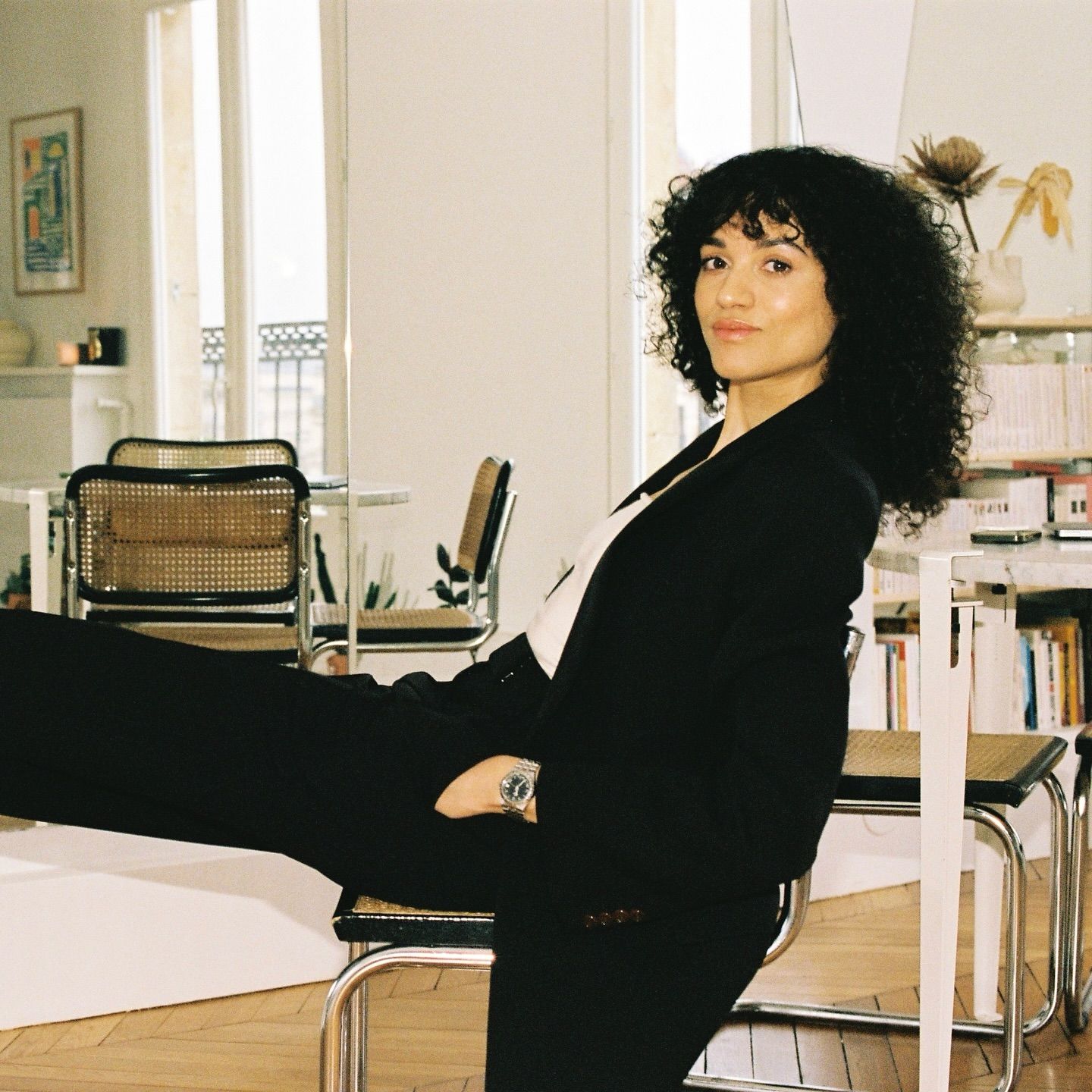
Laurianne Milerre is the founder of PLUME®, and editorial creative agency built by journalists. After 14+ years in top-tier media, she now helps brands craft sharp, authentic narratives. Since 2018, she's worked with 170+ organizations and interviews global leaders and cultural icons, drawing out candid, compelling stories.
What led you to start Plume, and what does your role look like in practice today?
I started my career at Condé Nast, and during those six years working across different media outlets, I was also approached by brands to help with copywriting and storytelling. Around that time, I began paying more attention to the texts I would see in shop windows or at art fairs. Often, I found myself thinking, “This could be expressed differently.”
In fashion and lifestyle publications, the setting was always extremely important—the photography, the set design—while the text often remained a small caption-like accompaniment. At the same time, you had brands like Acne Studios publishing Acne Papers, a heavyweight print publication dedicated to culture in the broadest sense. I found that incredibly inspiring. They were paying real attention to detail and giving people something meaningful to engage with.
I started Plume to offer brands or even regular people my experience gained from working within large publishing houses. I wanted to create an alternative to big advertising agencies—a studio focused specifically on storytelling, tone of voice, and writing. I began small, and it gradually grew over time.
As an editorial director at Plume, I supervise every project. I edit the work, challenge it, and participate in every brainstorm, until we reach the moment where everything clicks.
To anyone who’s experiencing a creative block, what are the things they can do to overcome it?
Sometimes the work ticks all the boxes, but the feeling just isn’t there. If redoing it or trying another approach doesn’t work, we just leave the office. Try going to a library and working from there to rewire your brain.
From launching entire publications to producing documentaries and podcasts for brands, many of your projects extend beyond traditional channels. What does editorial writing allow that classical branding sometimes flattens? Where do you see the biggest tension or opportunity between the two?
That’s a big question. What I find interesting about editorial work is that, strangely enough, it gives us a lot of freedom. Unlike design, where you can reference images or build a mood board to explain the direction, storytelling is harder to pin down visually. Even our clients tend to rely on similar references because they rarely pay close attention to the texts themselves. They might say they love Hermès storytelling or mention Monoprix (French supermarket chain) for its bold and cheeky tone.
Because of that ambiguity, we’re given a lot of space. We take the brief, try to understand what the brand really needs—the emotion, the intention, the goal they want to reach—and from there we can propose something that might not be what they initially expected, but that ultimately works.
Moving into freer forms of expression is very important for us. When we create brand voice guidelines, for instance, we try to move away from strategy language and instead use real examples. Sometimes it’s a video or an audio recording of someone speaking. It’s much easier to grasp a voice when you can hear it in your head than when you’re asked to imagine a fictional brand persona. Who is this person? She’s a woman, she’s forty, she lives in a big city… She doesn’t exist!
Another reality is that the CMOs and teams inside these companies change frequently. So if we want people to engage with what we’re creating, we need to tap into their emotions as well. What we write matters, of course, but the way we deliver it to the people who will actually use it is just as important.
In the end, we try to give brands the kinds of tools we wished we had when we were working with editorial guidelines ourselves. We really try to make their in-house teams excited. Even brand guidelines need to have a story to stick.
You’ve managed and worked with teams of writers. What tip would you give to new writers working on a brand story or manifesto?
I’d say, try to set a scene. Think back to your last summer. What were you doing? Who was the friend you called the most? What were you talking about? Forget about the brand, think of your personal life—the last time you were happy, the last smell you remember, the last dish you cooked that you liked. Then take this emotion to bring substance to your writing.
You mentioned delving into the archives of Au Départ (a suitcase company) to produce a collection of texts presenting its history, essence, and trajectory. How do you approach historical material? Do you tend to preserve, reinterpret, or challenge it?
Au Départ is a historic French luxury trunkmaker founded in 1834, often mentioned alongside Louis Vuitton, Goyard, and Moynat as one of the great Parisian luggage houses. It was a pioneer of trunk-making, but the company closed in the 1950s. Its belongings were auctioned off, and the archives were lost, so by the time we were invited to work on the rebrand, we were essentially dealing with a missing history.
In many ways, they had no clear roots left to rely on. They asked us to help them understand who they were so we could also imagine where they might go next. The design team began rebuilding a small collection of original suitcases by sourcing pieces at auctions. One of the first discoveries was that a trunk had belonged to Antoine de Saint-Exupéry, the author of The Little Prince.
From there, we started looking beyond the brand itself and into the wider cultural context of the time. We turned to history books, but also literature from that era, to understand what travel meant when the world was opening up through the first railway networks. What were people discussing? What were they debating in cafés? Writers like Émile Zola helped us grasp the spirit of the time.
The company didn’t even have a sense of a brand. The logo was changing on every suitcase, depending on who was signing it! Everything was custom-made, and they were the first to include a protective locker. At the end, we decided to present a body of research where we laid out some possibilities for understanding their identity. We wrote a brand narrative that speaks of their hands-on nature while keeping the pioneering spirit alive. It became a roadmap for future positioning and for writing a new chapter.
In your work with Polène, you created the Off Screen documentary series, which tells the stories of the artisans behind their handmade leather goods through their own eyes. What was that experience like, and do you want to do more work like this in the future?
First of all, winning the trust of these people was no small task. Speaking in front of a camera can be intimidating. These artisans often live in the same villages their families have lived in for generations, so the idea of being filmed—and of talking about their personal story, not just their craft—was quite stressful for them.
To make the process easier, we created the initial setup. The first step was to work with a Spanish journalist who was local to the region. She knew the villages and the culture, which helped create trust from the beginning.
Our intention was to make a film about craftsmanship that wouldn’t fall into clichés. The brief for this documentary series was to explore their crafts, but also their passions, their traditions, and their connection to their town and family. The challenge is that you can’t control what people will say. So we started with preparation interviews, both to make the artisans feel more comfortable and to understand more about them as individuals. What made the series work, I think, was the way we treated the people and the time we gave them to open up. That kind of trust doesn’t happen overnight. It’s not something you can achieve simply by sending a mood board or a brief.
The videos wove together all those small, warm notes that give depth to portraits. They spoke about their dreams, the sun, their homes, and families—it became something much more tangible.
And yes, I would love to continue working in this way. Recently, we received a brief from a perfumer who wants to interview people about his new fragrances. Our role is to write the questions in a way that feels authentic and to find an angle that moves beyond a brand conversation—something that feels more like two people connecting on a deeper level.
BIO
Laurianne Milerre is the founder of PLUME®, and editorial creative agency built by journalists. After 14+ years in top-tier media, she now helps brands craft sharp, authentic narratives. Since 2018, she's worked with 170+ organizations and interviews global leaders and cultural icons, drawing out candid, compelling stories.
Further Reading