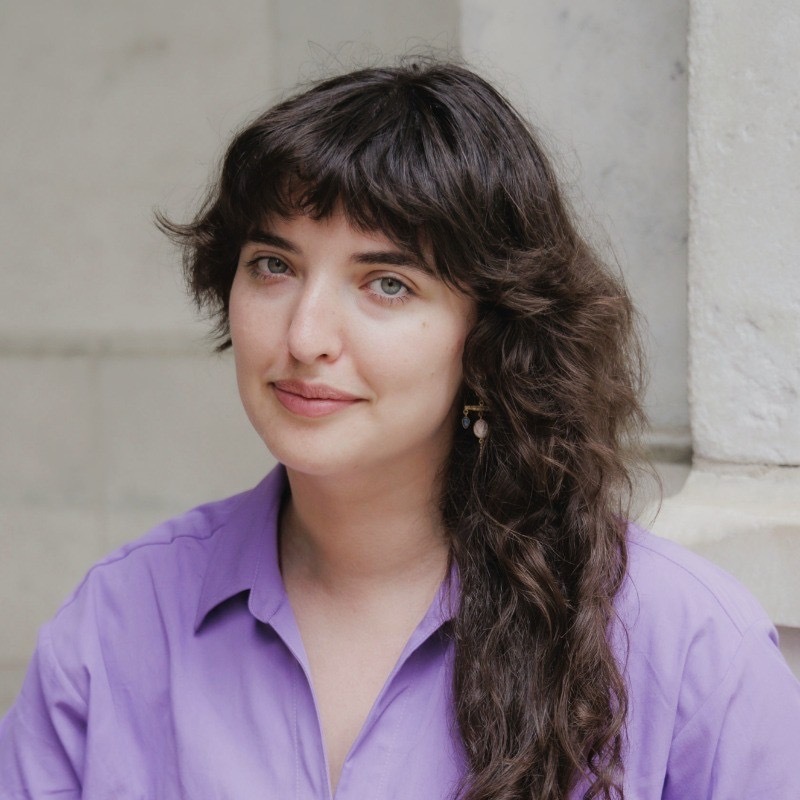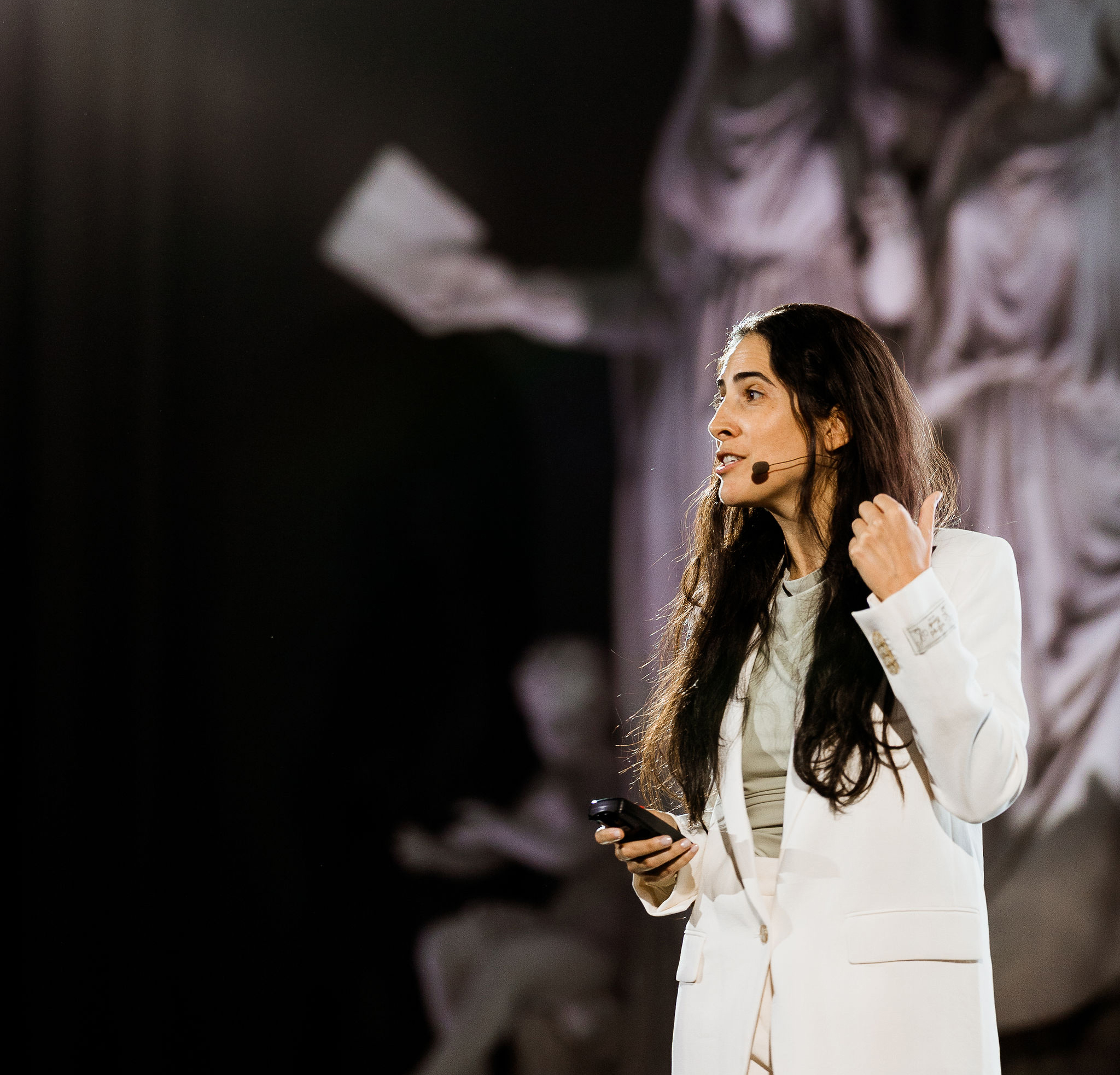
Sari Azout is the founder of Sublime, a space (or, as described online, a “second brain with a soul”) for archiving the interesting and inspiring things you find on the internet. But her work is as much about philosophy as it is about product.
Long before Sublime, she was building her own archives — collecting quotes, images, and fragments of language that felt worth holding onto. That instinct now sits at the center of her practice: a belief that creative work doesn’t grow from thin air, but from what we choose to keep, revisit, and connect over time.
In this conversation, Sari shares her perspective on originality, curation, and taste — ideas that feel very much up for debate right now in the world of brand and marketing.
Where do you live currently? And where are you from?
I live in Miami. I was born and raised in Barranquilla, Colombia. I moved to the U.S. for college. I went to Brown University in Rhode Island, then lived in NYC for several years. I’ve been living in Miami for the past 10 years.
You’ve built a business around saving and curating ideas from the internet. Have you always been someone who collects things — articles, images, notes, quotes — or did that habit develop over time?
YES. I have never been interested in collecting physical things. My house is extremely minimal, my wardrobe is minimal. But I have always loooved collecting ideas. I still have notebooks from when I was 9 years old clipping literary quotes, poems, my own version of a commonplace book before I even knew what that was. Nine year old me would be zero surprised Sublime is where I ended up planting my flag.
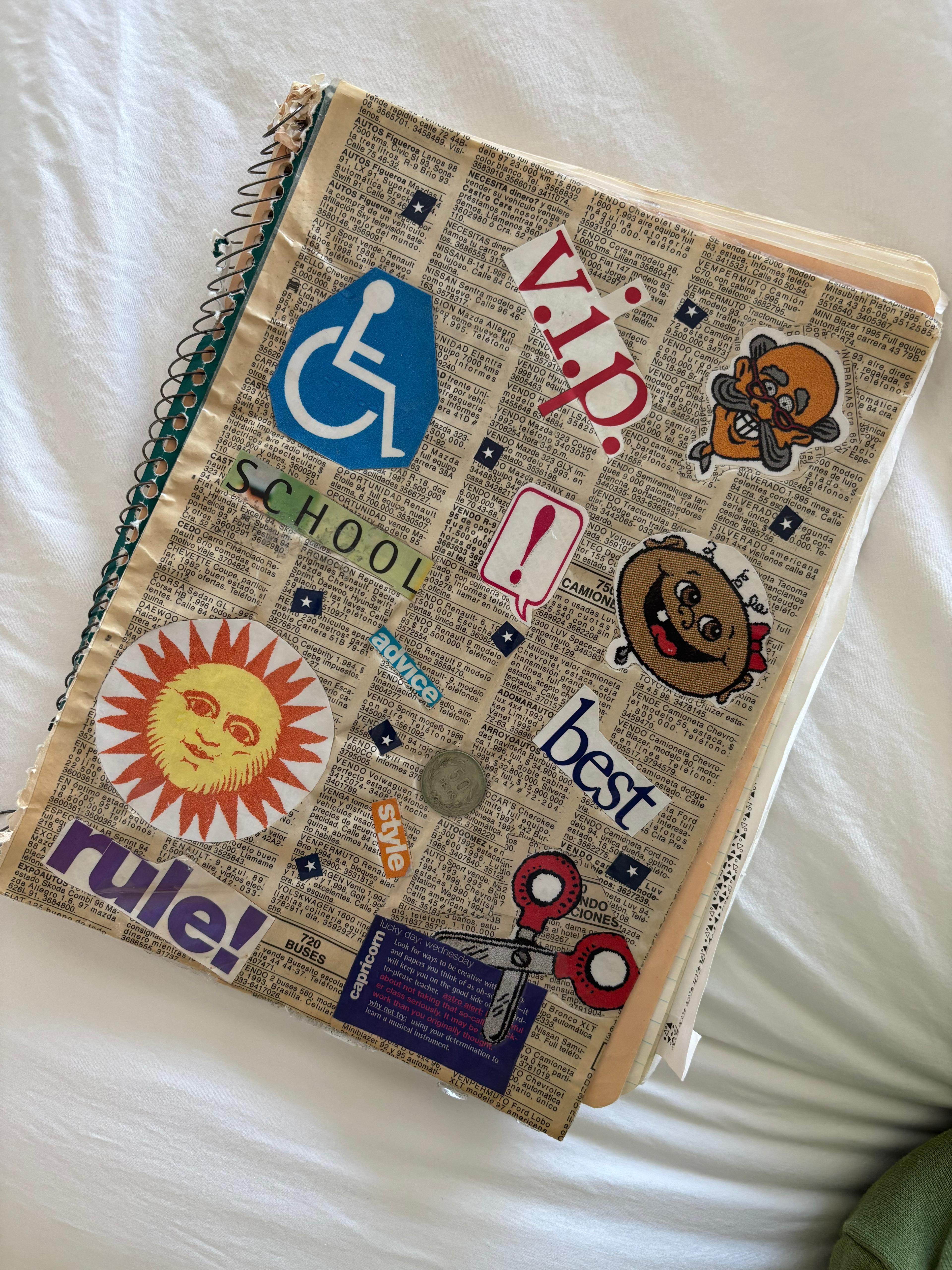
One of the themes we’ve been exploring this month is the idea that archives help creatives draw on the past to imagine the future. How does archiving influence your work or process?
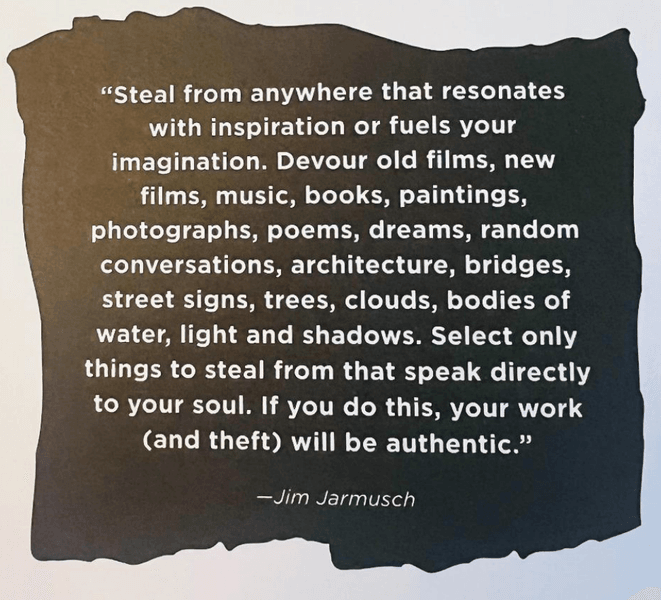
The only constant at various phases of my creative process is wading through a field of references. I have a decade worth of quotes, lines from songs, paintings, images, book highlights, bookmarks, random conversations, and other things that have moved me saved in my Sublime library. The unaided mind is highly overrated. Humans aren’t good at creating things from scratch. Our genius likes in taking something, evolving it, connecting it to something else, responding to it. In my opinion our culture puts too much of a premium on originality. All original ideas are combinations of other people’s ideas. What is important is not that we borrow but how we borrow. What I care about is making work that feels sincere and honest.

Do you think the ability to archive and curate well is becoming a more important creative skill?
It’s always been important. But something about the current era where it’s become so easy to make STUFF faster than you can think makes having a clear point of view the scarce thing. We’ve all had the disorienting experience where we prompt AI to help us come up with a headline or paragraph or whatever and it vomits twenty options in seconds. But which one will you put your name on? If you’ve been curating and nurturing an archive, the skill you’ve been developing in that process is that of understanding your own preferences, paying attention to what moves you and cultivating your own way of seeing. AI ultimately is tasteless technology. It does not know how to choose. It doesn’t have the soul and coherence of a point of view built through years of genuine inquiry and contact with the world.
The manifesto on the Sublime website is beautiful — it reads more like an essay than product copy. How did that piece of writing come together?
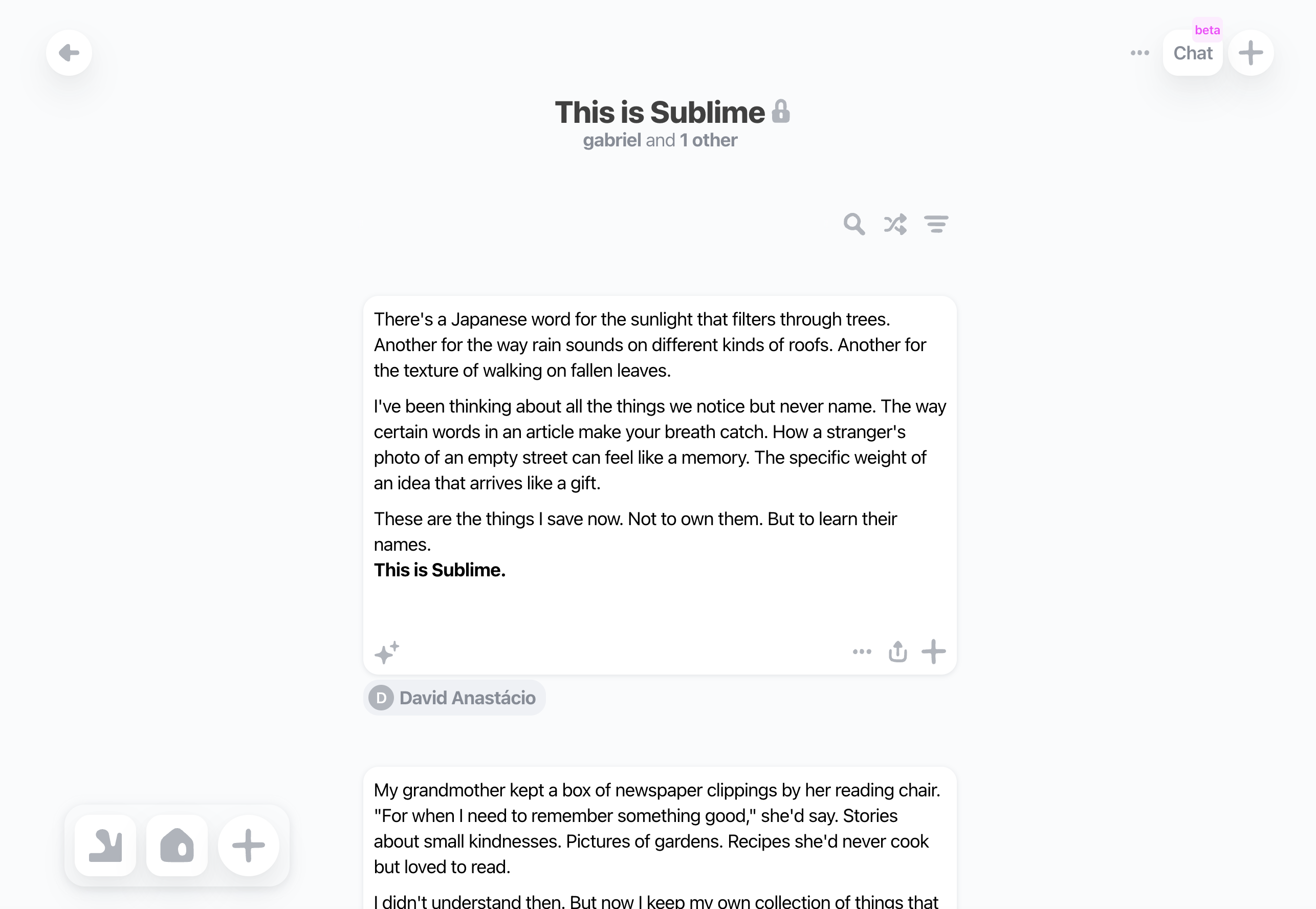
It came together the way most things worth making do, messily and over a long period of time. The breakthrough was realizing we needed two versions of our landing page: a practical feet on the ground one to answer what Sublime actually does and a head in the clouds version which became the manifesto. That idea was inspired by this personal site which I discovered browsing on Sublime where someone had written different versions of how they described themselves.
Once I had the idea, I created a private collection on Sublime and started dumping ideas that felt relevant. I did this for weeks before I wrote a single word. Just let the pile grow. This gestation period is crucial. People think you begin by knowing what you want to say. But for me, I build the collection first. I don’t know what I want to say and how I want to say it until I can see what I'm drawn to. Once I have enough raw material, I move over to using Sublime canvas to look at the ideas all at once and start to generate order. Starting a sublime collection for an amorphous idea, then moving on to connect the dots and find the shape of an idea is one of the great pleasures of my life.
Sublime doesn't feel like your typical SaaS product. Tell us about the strategy behind the brand look, feel, story and vibe?
I think companies reflect the inner world of the people building them. Sublime is very much “me-shaped” in the sense that I didn’t start with a SaaS shaped problem, I started in pursuit of a feeling – a better way to be on the internet.
There’s something so soulless about our culture, with everything optimized, accelerated, automated. I felt a deep longing for meaning, beauty, realness. Sublime is meant to be a vessel for that. Of course there is real utility under the hood – the practicality of archiving and smart search and all the things you’d expect from a sophisticated inspiration management tool, but all of that is in service of the sublime feeling. This is why it is so easy to extend the brand beyond the product. We make zines, merch, events that are all expressions of the same intention.
At the end of the day, it comes down to making things that we genuinely want ourselves, in a way that seems fun and durable, and at a level of quality we like.
The name Sublime is rich in meaning and history. How did you arrive at that name and how influential was the name within the brand?
We started with a side project called Startupy that eventually morphed into what is now Sublime, and we knew we had to rename it. One night, at 2am, my cofounder Gabe DMed me from Madrid. He said: "I have our name." I said: "What is it?" He said: "Sublime."
And that’s it. We both knew.
After the name, Sublime took on a life of its own. The name sets the journey. It’s as if it could not have been called anything else.
Sublime feels like a product shaped by language as much as anything else. How intentional are you about the words inside the product itself? And what words or phrases became anchors for the Sublime brand early on?
This whole journey has been an uphill battle with words. The very thing we’re building toward, by definition, eludes language. The dictionary definition of sublime (from the Latin sublīmis ) is literally the quality of greatness, whether physical, moral, intellectual, metaphysical, aesthetic, spiritual, or artistic beyond all possibility of calculation.
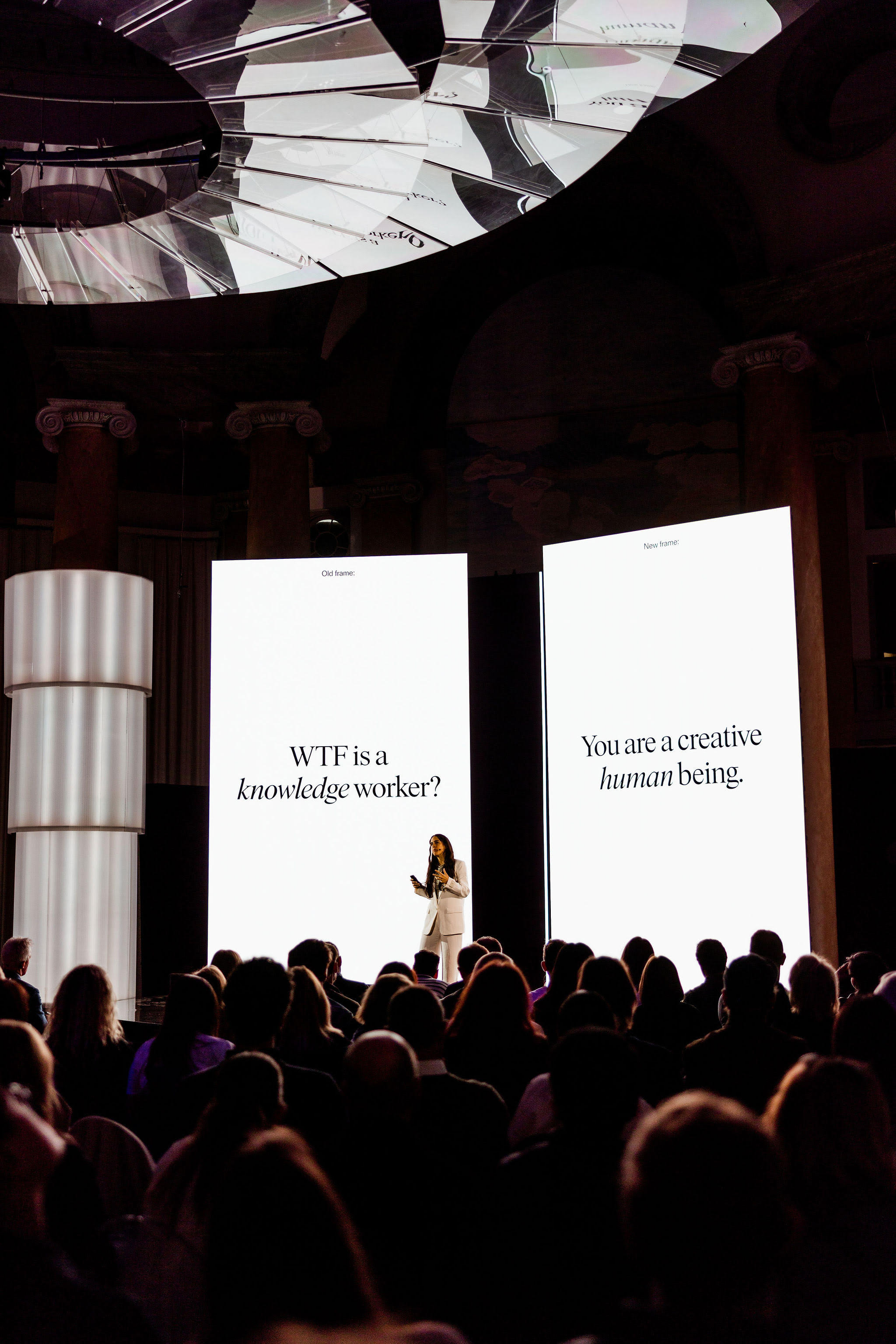
There are brand copy moments that feel right. For example, one line on our landing page says: “WTF is a knowledge worker. You are a creative human being.” That feels us.
But for the most part a frustrating part of this project is the feeling that I’ll never have the perfect language for it. You can feel this struggle here.
It’s funny in a recent survey we did for our community, we asked people what they would use if they could no longer use Sublime. The answers ranged from alcohol, a mirror, and Obsidian.
You write regularly on Substack. How does writing factor into your life? Do you see writing as a form of thinking— or a way to test ideas or share updates in public?
Both. I don’t know how to navigate the world without putting pen to paper. When I don’t carve out time to write, I get antsy and irritable. I have to fight not to see everything else in my life as an annoyance, because it’s time spent away from whatever knots I’m trying to untangle.
The other part is that writing and sharing our journey in public is a meaningful part of how people discover Sublime. I love sharing ideas. I think letting people in on the process is a beautiful thing, but I haven’t yet found a satisfying way to bridge the content creation demands of running a business with a pace that suits my sanity. The things I want to say take time.
If someone looked at the archive of things you’ve saved over the last decade — articles, images, references, quotes, ideas — what story would it tell about you?
I have my Sublime library connected to Claude via MCP, so I asked this question and this part of the response stood out to me as true: “The world keeps offering clean stories — this is good, that is bad, pick a side. And you keep filing receipts that say: it's more complicated than that.”
I am someone who almost always sees both sides. I try to appreciate multiple perspectives. I am comfortable with doubt and am not attracted to ideologies, herd mentality, or dogma. I think my library reflects a story of someone comfortable with ambiguity.

What is your ultimate goal with Sublime? If not long-term, where do you even feel like taking this in the next 5 years?
Honestly, I don't have a goal beyond making sure Sublime can stay in orbit for a long time and continue to be meaningful for the people it serves. Goals have never quite resonated with me, they go away the moment you hit them which feels… sad? I’ve explored these ideas in a collection called growth without goals. I do think we’re living in very exciting times at a philosophical level. And I’m excited to stay in the pulse of it. The questions I’m interested in – how we relate to information, how tools shape thinking, what creative purpose means in the age of AI, how humans can flourish alongside technology - feel so fertile right now and I’d just like to stay at the heart of the conversation, you know? I feel very creatively and intellectually inspired right now.
Where can our Subtext readers keep up with you?
Subscribe to our Substack newsletter. Follow me on Instagram and Twitter. And most importantly, join Sublime!
Bonus Round
One internet archive every creative should explore or bookmark?
This collection of obscure PDFs is delicious.
If you had to pick one - analog or digital?
Digital. I’m messy and I love a good search.
The best piece of writing you read recently?
The Third Chair by Henrik Karlsson - it’s short (400 words) and will give you goosebumps.
Vice you kicked. Vice you’ll never give up.
Kicked listening to podcasts at 2x speed. It was making it harder to have regular human conversations. Vice I’ll never give up is checking Stripe multiple times a day. I get my dopamine from people believing in Sublime enough to pay for it.
Sari Azout is the founder of Sublime, a space (or, as described online, a “second brain with a soul”) for archiving the interesting and inspiring things you find on the internet. But her work is as much about philosophy as it is about product.
Long before Sublime, she was building her own archives — collecting quotes, images, and fragments of language that felt worth holding onto. That instinct now sits at the center of her practice: a belief that creative work doesn’t grow from thin air, but from what we choose to keep, revisit, and connect over time.
In this conversation, Sari shares her perspective on originality, curation, and taste — ideas that feel very much up for debate right now in the world of brand and marketing.
Where do you live currently? And where are you from?
I live in Miami. I was born and raised in Barranquilla, Colombia. I moved to the U.S. for college. I went to Brown University in Rhode Island, then lived in NYC for several years. I’ve been living in Miami for the past 10 years.
You’ve built a business around saving and curating ideas from the internet. Have you always been someone who collects things — articles, images, notes, quotes — or did that habit develop over time?
YES. I have never been interested in collecting physical things. My house is extremely minimal, my wardrobe is minimal. But I have always loooved collecting ideas. I still have notebooks from when I was 9 years old clipping literary quotes, poems, my own version of a commonplace book before I even knew what that was. Nine year old me would be zero surprised Sublime is where I ended up planting my flag.
One of the themes we’ve been exploring this month is the idea that archives help creatives draw on the past to imagine the future. How does archiving influence your work or process?
The only constant at various phases of my creative process is wading through a field of references. I have a decade worth of quotes, lines from songs, paintings, images, book highlights, bookmarks, random conversations, and other things that have moved me saved in my Sublime library. The unaided mind is highly overrated. Humans aren’t good at creating things from scratch. Our genius likes in taking something, evolving it, connecting it to something else, responding to it. In my opinion our culture puts too much of a premium on originality. All original ideas are combinations of other people’s ideas. What is important is not that we borrow but how we borrow. What I care about is making work that feels sincere and honest.
Do you think the ability to archive and curate well is becoming a more important creative skill?
It’s always been important. But something about the current era where it’s become so easy to make STUFF faster than you can think makes having a clear point of view the scarce thing. We’ve all had the disorienting experience where we prompt AI to help us come up with a headline or paragraph or whatever and it vomits twenty options in seconds. But which one will you put your name on? If you’ve been curating and nurturing an archive, the skill you’ve been developing in that process is that of understanding your own preferences, paying attention to what moves you and cultivating your own way of seeing. AI ultimately is tasteless technology. It does not know how to choose. It doesn’t have the soul and coherence of a point of view built through years of genuine inquiry and contact with the world.
The manifesto on the Sublime website is beautiful — it reads more like an essay than product copy. How did that piece of writing come together?
It came together the way most things worth making do, messily and over a long period of time. The breakthrough was realizing we needed two versions of our landing page: a practical feet on the ground one to answer what Sublime actually does and a head in the clouds version which became the manifesto. That idea was inspired by this personal site which I discovered browsing on Sublime where someone had written different versions of how they described themselves.
Once I had the idea, I created a private collection on Sublime and started dumping ideas that felt relevant. I did this for weeks before I wrote a single word. Just let the pile grow. This gestation period is crucial. People think you begin by knowing what you want to say. But for me, I build the collection first. I don’t know what I want to say and how I want to say it until I can see what I'm drawn to. Once I have enough raw material, I move over to using Sublime canvas to look at the ideas all at once and start to generate order. Starting a sublime collection for an amorphous idea, then moving on to connect the dots and find the shape of an idea is one of the great pleasures of my life.
Sublime doesn't feel like your typical SaaS product. Tell us about the strategy behind the brand look, feel, story and vibe?
I think companies reflect the inner world of the people building them. Sublime is very much “me-shaped” in the sense that I didn’t start with a SaaS shaped problem, I started in pursuit of a feeling – a better way to be on the internet.
There’s something so soulless about our culture, with everything optimized, accelerated, automated. I felt a deep longing for meaning, beauty, realness. Sublime is meant to be a vessel for that. Of course there is real utility under the hood – the practicality of archiving and smart search and all the things you’d expect from a sophisticated inspiration management tool, but all of that is in service of the sublime feeling. This is why it is so easy to extend the brand beyond the product. We make zines, merch, events that are all expressions of the same intention.
At the end of the day, it comes down to making things that we genuinely want ourselves, in a way that seems fun and durable, and at a level of quality we like.
The name Sublime is rich in meaning and history. How did you arrive at that name and how influential was the name within the brand?
We started with a side project called Startupy that eventually morphed into what is now Sublime, and we knew we had to rename it. One night, at 2am, my cofounder Gabe DMed me from Madrid. He said: "I have our name." I said: "What is it?" He said: "Sublime."
And that’s it. We both knew.
After the name, Sublime took on a life of its own. The name sets the journey. It’s as if it could not have been called anything else.
Sublime feels like a product shaped by language as much as anything else. How intentional are you about the words inside the product itself? And what words or phrases became anchors for the Sublime brand early on?
This whole journey has been an uphill battle with words. The very thing we’re building toward, by definition, eludes language. The dictionary definition of sublime (from the Latin sublīmis ) is literally the quality of greatness, whether physical, moral, intellectual, metaphysical, aesthetic, spiritual, or artistic beyond all possibility of calculation.
There are brand copy moments that feel right. For example, one line on our landing page says: “WTF is a knowledge worker. You are a creative human being.” That feels us.
But for the most part a frustrating part of this project is the feeling that I’ll never have the perfect language for it. You can feel this struggle here.
It’s funny in a recent survey we did for our community, we asked people what they would use if they could no longer use Sublime. The answers ranged from alcohol, a mirror, and Obsidian.
You write regularly on Substack. How does writing factor into your life? Do you see writing as a form of thinking— or a way to test ideas or share updates in public?
Both. I don’t know how to navigate the world without putting pen to paper. When I don’t carve out time to write, I get antsy and irritable. I have to fight not to see everything else in my life as an annoyance, because it’s time spent away from whatever knots I’m trying to untangle.
The other part is that writing and sharing our journey in public is a meaningful part of how people discover Sublime. I love sharing ideas. I think letting people in on the process is a beautiful thing, but I haven’t yet found a satisfying way to bridge the content creation demands of running a business with a pace that suits my sanity. The things I want to say take time.
If someone looked at the archive of things you’ve saved over the last decade — articles, images, references, quotes, ideas — what story would it tell about you?
I have my Sublime library connected to Claude via MCP, so I asked this question and this part of the response stood out to me as true: “The world keeps offering clean stories — this is good, that is bad, pick a side. And you keep filing receipts that say: it's more complicated than that.”
I am someone who almost always sees both sides. I try to appreciate multiple perspectives. I am comfortable with doubt and am not attracted to ideologies, herd mentality, or dogma. I think my library reflects a story of someone comfortable with ambiguity.
What is your ultimate goal with Sublime? If not long-term, where do you even feel like taking this in the next 5 years?
Honestly, I don't have a goal beyond making sure Sublime can stay in orbit for a long time and continue to be meaningful for the people it serves. Goals have never quite resonated with me, they go away the moment you hit them which feels… sad? I’ve explored these ideas in a collection called growth without goals. I do think we’re living in very exciting times at a philosophical level. And I’m excited to stay in the pulse of it. The questions I’m interested in – how we relate to information, how tools shape thinking, what creative purpose means in the age of AI, how humans can flourish alongside technology - feel so fertile right now and I’d just like to stay at the heart of the conversation, you know? I feel very creatively and intellectually inspired right now.
Where can our Subtext readers keep up with you?
Subscribe to our Substack newsletter. Follow me on Instagram and Twitter. And most importantly, join Sublime!
Bonus Round
One internet archive every creative should explore or bookmark?
This collection of obscure PDFs is delicious.
If you had to pick one - analog or digital?
Digital. I’m messy and I love a good search.
The best piece of writing you read recently?
The Third Chair by Henrik Karlsson - it’s short (400 words) and will give you goosebumps.
Vice you kicked. Vice you’ll never give up.
Kicked listening to podcasts at 2x speed. It was making it harder to have regular human conversations. Vice I’ll never give up is checking Stripe multiple times a day. I get my dopamine from people believing in Sublime enough to pay for it.