Tasha Young Interview
Tasha Young, writer and creator of œvra, talks about her new platform helping creatives to work in the flow state.
Published on
Dec 8, 2025
6
min. read
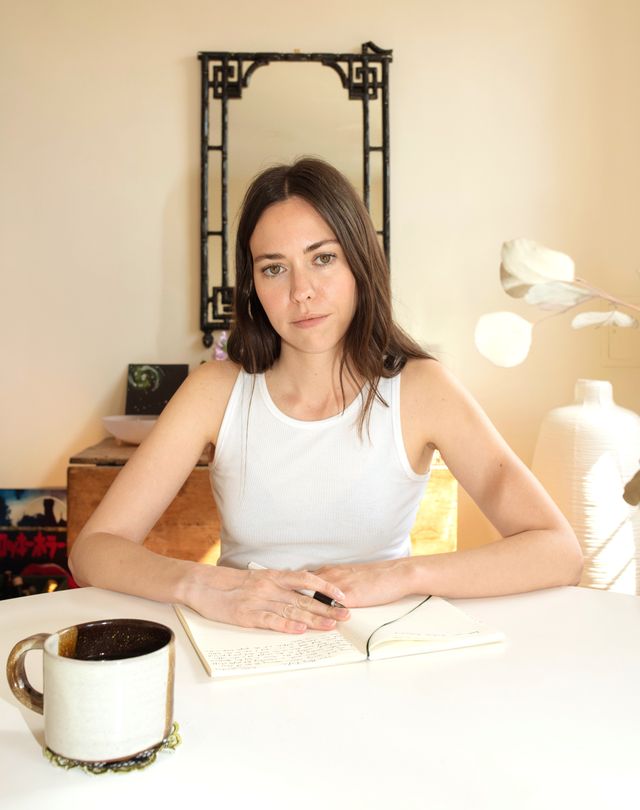
Where's your hometown and where do you live currently?
Portland, Maine born and raised. Montréal, Québec also feels like my hometown in a sense because it’s the first city where I lived on my own as an adult when I went to university there. I’ve since lived in NYC, LA, London, and Paris. At the moment, I’m in Berlin, Germany, but I’m planning to move (back) to Paris soon.
In a few sentences, describe what you do.
I’m a writer and multimedia artist. Research, design, music, and curation are all part of my creative practice. As the creator of oevra and founder of Aurasphère (my Paris-based creative R&D studio, the company behind the oevra brand), I’m a CEO, creative director, product designer, etc. My career for the past decade has been in editorial, copywriting and brand strategy. I’m also a creative writer (fiction, nonfiction, poetry) and my work has been published in various magazines and books.
How would you describe œvra to someone who's never heard of it? What makes it different from productivity apps or meditation apps?
œvra is an online platform that helps people get into creative flow more easily and stick to a creative practice every day.
It includes interactive features and tools that make it easier to start working, stay focused, and get unblocked, plus a random creative prompt generator and self-paced courses. It's all based on research and reading I delved into about the neuroscience and psychology of how creativity and flow state work. The whole point is to make creativity more accessible and enjoyable, wherever you're coming from.
As far as our intentions, it is not a productivity app, because creativity is inherently valuable for its own sake. But it will very likely have the outcome of making you more productive.
We do use some mindfulness and meditation techniques, but only because they genuinely support creative thinking—not because we’re trying to turn creativity into another thing to optimize.
Who is œvra for? Are you building it for people who already identify as "creatives," or are you trying to reach people who don't think of themselves that way yet?
All of the above — everyone can benefit, whether you’re a professional creative using oevra while you work (freelancers, write us off on your taxes!) or you’ve never made art in your life. Creative thinking applies to literally anything and everything in life. You could use oevra for being more innovative in business or at cooking or whatever it is you’re into.
What do you want people to understand about œvra that might not be immediately obvious?
It’s made for creatives by creatives, without investor funding, so it’s truly been a labor of love. Every detail is designed thoughtfully and with care for the user’s experience to feel as flowy and soothing as possible. We designed and built it all as a small, bootstrapped team because we aligned on the vision and mission, and genuinely wanted to make an authentic creative company. We teamed up with Italian creative development studio Overpx to create the website and app front-end design to be a seamless, atmospheric, immersive experience that’s truly enjoyable to use.
What do you wish more people (especially employers) understood about neurodivergent creatives and the environments we need to do our best work?
Sensitivity is an asset to optimize for, not a flaw that people should have to hide and fight internal battles against in order to contribute meaningful work in society. Everyone is impacted by their environment in ways that deeply affect them psychologically, emotionally, etc. even those who are not ‘sensitive’ or aware of it, and if we have to keep up this capitalism nonsense it’s in everyone’s best interest to pay more attention to environment and allow people the flexibility to work where best suits them (aka stop requiring people to come into the office if they struggle to focus or be regulated in that environment).
What are the skills that make the biggest difference in your work?
Creative thinking could be arguably my main occupation at its core, and the skills that I think best facilitate creative thinking include risk tolerance, cognitive flexibility, a growth mindset, resilience and antifragility. (I write a lot about these topics in the educational content within oevra.)
Do you have rituals for getting into creative flow, or does it come naturally? What's your favorite offline source of inspiration?
One of the things I found delightful once I started researching creativity was how everything I would do intuitively was backed up by scientific research, so I was doing certain things to get into creative flow that really worked without knowing why. It’s all about environment and the nervous system being regulated, so your brain can access that state. I always put on music first — usually ambient music or jazz, but rarely with lyrics/vocals. (Exception: Jessica Pratt and similar artists whose work somehow is on the right wavelength that their singing lifts how I feel immediately and doesn’t distract me too much). The lighting in the space, what my ‘view’ is or the objects I’m surrounded by, and even what I’m wearing at the time are all important factors to get right.
Once my set and setting feel right, I get started by doing a brief mindfulness practice and other easy, low-stakes ‘warmups’ (which I built into the app too). Warmups might include reading, pondering a reflective prompt, browsing inspiration I’ve saved on MyMind, are.na, or Cosmos, or doing something freestyle like an experimental sketch or free-writing in my journal.
Rapid Fire
What do you listen to while working?
My ambient playlists and/or NTS Radio. I make supporter radio mixes for NTS sometimes which also include a lot of my favorites for working. I commissioned custom music for creative flow from a few of my favorite contemporary ambient artists (Rhucle, H.Takahashi, and Loris S. Sarid) which you can hear exclusively in the oevra app.
What's your most creatively inspired time of day?
Honestly it depends on the day, but generally I have different peak times throughout the day.
If you could ban one phrase from creative discourse, what would it be?
Much of the pseudo-spiritual stuff that people regurgitate from Rick Rubin or The Artist’s Way that makes creativity out to be something mystical (sorry not sorry).
Favorite personal mantra?
From my therapist: “Name it to tame it.” When I’m spiraling in my mind, taking that first step of noticing that and pulling my consciousness out of that spiral to observe and name how I’m feeling/thinking is the most important, fundamental mindfulness technique to practice over and over again, and that distance of perspective from your own inner world can lead to some great creative insights.
If you weren't doing this, what would you be doing?
Either something more focused on music or I’m really into interior design. Lately I’ve been sketching ideas for design objects like lamps out of ceramic, washi paper, and other organic materials with pleasing textures.
Where's your hometown and where do you live currently?
Portland, Maine born and raised. Montréal, Québec also feels like my hometown in a sense because it’s the first city where I lived on my own as an adult when I went to university there. I’ve since lived in NYC, LA, London, and Paris. At the moment, I’m in Berlin, Germany, but I’m planning to move (back) to Paris soon.
In a few sentences, describe what you do.
I’m a writer and multimedia artist. Research, design, music, and curation are all part of my creative practice. As the creator of oevra and founder of Aurasphère (my Paris-based creative R&D studio, the company behind the oevra brand), I’m a CEO, creative director, product designer, etc. My career for the past decade has been in editorial, copywriting and brand strategy. I’m also a creative writer (fiction, nonfiction, poetry) and my work has been published in various magazines and books.
How would you describe œvra to someone who's never heard of it? What makes it different from productivity apps or meditation apps?
œvra is an online platform that helps people get into creative flow more easily and stick to a creative practice every day.
It includes interactive features and tools that make it easier to start working, stay focused, and get unblocked, plus a random creative prompt generator and self-paced courses. It's all based on research and reading I delved into about the neuroscience and psychology of how creativity and flow state work. The whole point is to make creativity more accessible and enjoyable, wherever you're coming from.
As far as our intentions, it is not a productivity app, because creativity is inherently valuable for its own sake. But it will very likely have the outcome of making you more productive.
We do use some mindfulness and meditation techniques, but only because they genuinely support creative thinking—not because we’re trying to turn creativity into another thing to optimize.
Who is œvra for? Are you building it for people who already identify as "creatives," or are you trying to reach people who don't think of themselves that way yet?
All of the above — everyone can benefit, whether you’re a professional creative using oevra while you work (freelancers, write us off on your taxes!) or you’ve never made art in your life. Creative thinking applies to literally anything and everything in life. You could use oevra for being more innovative in business or at cooking or whatever it is you’re into.
What do you want people to understand about œvra that might not be immediately obvious?
It’s made for creatives by creatives, without investor funding, so it’s truly been a labor of love. Every detail is designed thoughtfully and with care for the user’s experience to feel as flowy and soothing as possible. We designed and built it all as a small, bootstrapped team because we aligned on the vision and mission, and genuinely wanted to make an authentic creative company. We teamed up with Italian creative development studio Overpx to create the website and app front-end design to be a seamless, atmospheric, immersive experience that’s truly enjoyable to use.
What do you wish more people (especially employers) understood about neurodivergent creatives and the environments we need to do our best work?
Sensitivity is an asset to optimize for, not a flaw that people should have to hide and fight internal battles against in order to contribute meaningful work in society. Everyone is impacted by their environment in ways that deeply affect them psychologically, emotionally, etc. even those who are not ‘sensitive’ or aware of it, and if we have to keep up this capitalism nonsense it’s in everyone’s best interest to pay more attention to environment and allow people the flexibility to work where best suits them (aka stop requiring people to come into the office if they struggle to focus or be regulated in that environment).
What are the skills that make the biggest difference in your work?
Creative thinking could be arguably my main occupation at its core, and the skills that I think best facilitate creative thinking include risk tolerance, cognitive flexibility, a growth mindset, resilience and antifragility. (I write a lot about these topics in the educational content within oevra.)
Do you have rituals for getting into creative flow, or does it come naturally? What's your favorite offline source of inspiration?
One of the things I found delightful once I started researching creativity was how everything I would do intuitively was backed up by scientific research, so I was doing certain things to get into creative flow that really worked without knowing why. It’s all about environment and the nervous system being regulated, so your brain can access that state. I always put on music first — usually ambient music or jazz, but rarely with lyrics/vocals. (Exception: Jessica Pratt and similar artists whose work somehow is on the right wavelength that their singing lifts how I feel immediately and doesn’t distract me too much). The lighting in the space, what my ‘view’ is or the objects I’m surrounded by, and even what I’m wearing at the time are all important factors to get right.
Once my set and setting feel right, I get started by doing a brief mindfulness practice and other easy, low-stakes ‘warmups’ (which I built into the app too). Warmups might include reading, pondering a reflective prompt, browsing inspiration I’ve saved on MyMind, are.na, or Cosmos, or doing something freestyle like an experimental sketch or free-writing in my journal.
Rapid Fire
What do you listen to while working?
My ambient playlists and/or NTS Radio. I make supporter radio mixes for NTS sometimes which also include a lot of my favorites for working. I commissioned custom music for creative flow from a few of my favorite contemporary ambient artists (Rhucle, H.Takahashi, and Loris S. Sarid) which you can hear exclusively in the oevra app.
What's your most creatively inspired time of day?
Honestly it depends on the day, but generally I have different peak times throughout the day.
If you could ban one phrase from creative discourse, what would it be?
Much of the pseudo-spiritual stuff that people regurgitate from Rick Rubin or The Artist’s Way that makes creativity out to be something mystical (sorry not sorry).
Favorite personal mantra?
From my therapist: “Name it to tame it.” When I’m spiraling in my mind, taking that first step of noticing that and pulling my consciousness out of that spiral to observe and name how I’m feeling/thinking is the most important, fundamental mindfulness technique to practice over and over again, and that distance of perspective from your own inner world can lead to some great creative insights.
If you weren't doing this, what would you be doing?
Either something more focused on music or I’m really into interior design. Lately I’ve been sketching ideas for design objects like lamps out of ceramic, washi paper, and other organic materials with pleasing textures.
Further Reading




Newsletters
Stay in the loop with The Subtext! Subscribe to our newsletter for the latest articles, exclusive interviews, and writing tips delivered straight to your inbox. Join our community of passionate writers and never miss a beat.