.png)
When we talk about design thinking, we’re usually talking about graphics, grids, and systems – not words, sentences or POVs. But the same principles that guide great design (clarity, intent, and structure) are what make great language possible too. Words have hierarchy. They have rhythm. They solve problems, too.
At R/GA, words are designed, not just written. Brittany Messenger and Hans Aschim lead the Verbal Design team, a practice that sits at the intersection of strategy, design, and writing. They collaborate across disciplines, translating complex ideas into language that shapes how global brands show up in the world.
In this conversation, we unpack what verbal design really means, how it differs from traditional copywriting, and how they see the culture around brands changing.


How did each of you find your way into this kind of work? And where did you get your start?
Britt: I’ve always loved writing. In college, I studied the art & science of writing — majoring in English with a focus in Creative Writing, and minoring in Writing & Rhetoric. After school, I got a job at a branding firm, where I applied those skills by proofing decks. Luckily, that was a great way to learn more about the questions we answer in branding (and I was eventually able to influence more than typo corrections).
Hans: One of my high school teachers actually told me I asked too many questions. I’ve always been interested in lots of topics and subjects. That’s what initially drew me to studying journalism. I worked in media, covering everything from art and design to sports and music.
I started to realize the same skills in telling a good magazine story — empathy, clarity, narrative — drive great brand work. Like journalism, brand work is about becoming immersed in a new world or topic, becoming an expert, then translating that expertise into stories that resonate with people. And of course, thankfully for me, it encourages asking a lot of questions.
When you think back on your career, is there a project or turning point that changed the way you think about branding?
Britt: Joining R/GA’s Business Transformation team (now Brand Design & Consulting) was a huge shift. Previously, I had felt very siloed as a writer: working on messaging frameworks and voice principles based on a positioning that was already locked, sending off copy to designers with the hope that the lines would connect with the spirit of the visual ID.
R/GA is the first place I worked where all crafts are brought in at the beginning of the project — and invited to stay on until we deliver. We all have our own areas of expertise, but we share in the development, progress, and success of the project. It’s an approach that models how brands exist in the world — all elements are connected and work together as one.
Hans: Coming from a media background, you’re exposed to brand identity from a downstream perspective. Messaging and tone arrive filtered through PR teams and campaign goals, but the connective throughline is still there. As a journalist covering brands, you’re constantly evaluating their authenticity — what lands, what gets ignored. Now, working in brand design, I’m about as upstream as you can get, shaping those same narratives well before they reach the world.
That shift has made me conscious of intent, how every decision in language, tone, and storytelling informs what comes next. I always consider the impact a Verbal Design choice will have across touchpoints for different audiences. How will a copywriter use this to write a headline? How will this shape messaging when a PR agency is getting briefed? Most importantly, how can this identity flex across touchpoints while remaining distinct, coherent and consistent?
That last question, that’s the big one. It’s where I’m constantly trying to push the question of a connective narrative in an authentic tone. When I first joined R/GA in 2022, I worked on a rebrand of a major global corporation. Name. Logo. Identity. Everything was on the table. We were starting from scratch while also drawing on some six decades of equity.
The scale of the ask was massive. We’re talking hundreds of touchpoints in multiple languages, a matrix of agency partners on the campaign side and complex business architecture challenges. We quickly learned: it’s not about telling the perfect (i.e. same) story all the time. It’s about creating an intelligent, adaptive system that empowers people to express our brand idea in a way that is dynamic and true to the moment and the medium. Thankfully at R/GA, we have the collaboration, expertise and experience combining creative and technology to make that happen.
What does a typical day look like for a Creative Director at R/GA — if such a thing even exists?
Britt: Prioritizing collaboration means I’m in a lot of meetings. I try to mix it up by giving them different titles: work sessions, quick debriefs, one-on-ones, standups, reviews, weeklies, or my personal favorite — Creative Corner. But the reality is I spend many 30- to 60-minute blocks on Zoom. Luckily, the topic shifts wildly (as I’m often on multiple projects) and the people I chat with are smart and funny. I do end up reviewing, editing, and writing at night, but I’ve always preferred to be in the deck when everyone else is asleep.
Hans: For creative teams, we work closely across disciplines so we’re always jamming with our visual design colleagues, usually hanging out in Figma or riffing in the comments of a Google doc. That natural, fluid collaboration is what keeps the work alive. It’s where the energy and spark comes from. And it’s fun. Of course the best ideas rarely come when you’re staring at a screen or on Zoom for hours. Touching grass is a must.
How do you define “verbal design” — and how does it differ from copywriting or brand writing?
Hans: They’re related but different.
Verbal Design is the system that shapes how a brand uses language. Everywhere, by anyone, in any situation. That means everything from naming conventions to headlines to campaigns to internal communications to TikToks. It’s not just about writing or tone of voice guidelines. It’s about creating brand systems for the intelligence age. Ultimately, making things that make things.
That means bridging creativity and strategy to establish the logic, tone, and structure that enable intelligent, adaptive experiences. We’re constantly experimenting with how we can apply design-thinking with emerging technologies to deliver personalized storytelling at scale.
TLDR: Verbal Design is the system that every piece of writing, no matter who creates it, sounds connected and consistent. Copywriting is one of the outputs of that system.
Copywriting and Verbal Design are two separate teams at R/GA. Why was it important for R/GA to build a distinct Verbal Design practice, rather than fold all the writing into one team?
Britt: Building on what Hans said, Verbal Design and Copywriting share similar skillsets, but have different specialties.
Verbal Design sits within Brand Design & Consulting: partnering with Brand Strategy, Visual Design, and Production to develop brand identities. Together, we answer questions like:
What role does this brand play in the world?
And how does that brand express its purpose?
What systems can we build to ensure that purpose comes to life cohesively across all touchpoints?
We will often collaborate with Copywriting — supporting on campaign work, pressure testing messaging hierarchy, or discussing how the brand can evolve in specific contexts.Together, we build and refine identities intelligent by design, experiences adaptive by nature, and stories personalized at scale. Neither discipline is more important than the other. In fact, I think our distinction shows just how important our separate practices are to R/GA.
Your team works closely with brand strategy and design — what does collaboration look like between the different teams at R/GA?
Hans: Collaboration is part of the process from day one. We get in the weeds during landscape audits and work closely with our strategy partners to make sure a coherent verbal identity takes shape as the strategic foundation is being built. The goal is cohesion — every piece of writing, from an internal strategy document to a campaign brief, should feel like it comes from the same, distinct place.
The early strategy phase is also when we start to design the larger connective narrative that drives the entire system. That story takes shape across mediums and touchpoints, evolving as it meets different audiences. As Verbal Designers, it’s our job to ensure that narrative not only aligns with the strategic foundation but also comes to life tonally in a way that feels both coherent and compelling.
One recent project where our collaborative approach really shone was FOX One. Our team built the entire brand system — from strategy and naming to the visual, verbal, and motion identities — all the way through the launch campaign, product, and beyond.
Because we were involved from the very beginning, we could ensure that the connective narrative thread we established as Verbal Designers stayed alive at every touchpoint. We partnered closely with our Campaign & Content Design team to flex and evolve that story across everything from Times Square takeovers to social copy, keeping the brand consistent, responsive and full of energy.

Is there a defined process to how you build verbal design deliverables? Or is it all done bespoke depending on the client and their unique needs?
Britt: Our ultimate goal is always the same: to ensure a brand tells a connected story everywhere it shows up. We develop tools to help writers, marketers, agency partners, and more create and evaluate that story. But how we get there is different for each client and ask.
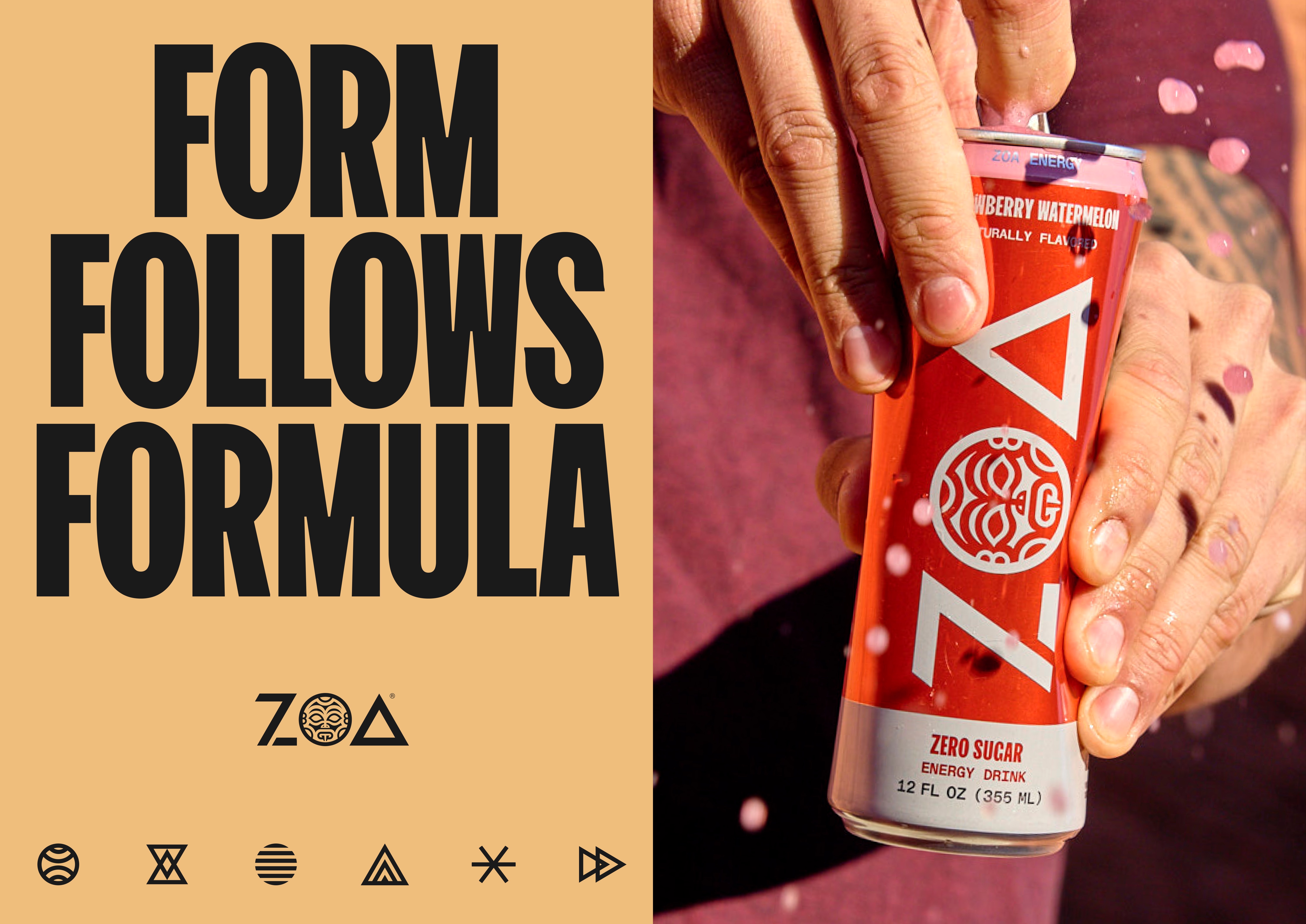
For example, we worked with Dwayne Johnson and his team on two brands in his portfolio: ZOA and the XFL. We needed to consider how DJ’s distinct voice and storytelling approach should influence the brand identities, ensuring his ethos is thoughtfully embedded into the expression and packaging up talking points to reflect the brand refresh.
Our approach shifted considerably for Google Play. Our task was to design a brand system that would show how Google Play, the world’s largest marketplace, was more than a super-sized store, but a service that connects people to experiences they love. Verbal Design needed to capture that emotion while uniting the narrative across their sub-brands, diverse IP, and all the ways people engage with the brand.
Lastly, the Verbal Design process evolves depending on the phase of the work and who we are partnering with. If we’re developing a brand foundation, we build messaging pillars and support on strategic manifestos to capture the spirit of the active purpose. When creating a brand identity, we partner with Visual Design to craft the brand idea and carry that through across verbal and visual elements of the brand system.
Brands have to show up in so many ways and so many places today. How do you design a verbal system that can flex across platforms, teams, and contexts?
Britt: It all comes back to our bespoke approach. The brands we build are designed to embody their unique role in the world. They need to be able to react and adapt to what’s going on around them.
That’s why we focus first on defining the Brand DNA: the core truths that will guide a brand’s expression everywhere. These aren’t just about Verbal Design, but the holistic brand identity.
And then we work with our clients and their teams to understand how we can apply and codify those principles. We need to understand their processes, goals, what’s working well today, and what can be improved for tomorrow. In the end, the system only works if people can actually use it. Our goal is to create something teams can pick up, interpret, and make their own. All without ever losing the thread of the brand.
How do you think the verbal design discipline will evolve as brands become more multi-modal — voice, AI chat, product interfaces, etc.?
Hans: This is something we talk about on a daily basis. We know that as the ways we interact and communicate changes so will how we write. I want to say the intelligence age is no different, but it feels bigger when it comes to everything, especially Verbal Design. The ability to work across disciplines to create a coherent yet distinct identity through verbal principles is more important than ever. I think of it like DNA. Verbal identity is the source code. It’s the principles, tone, and logic that determine how a brand behaves, no matter the channel.
That DNA gives the brand its identity, but it’s also adaptable, capable of expressing itself differently depending on the environment. The copy might live in an AI chat, a personalized generative headline, or a script our team workshopped over a dozen iced coffees. It’s the source code in the DNA (our Verbal Design) that makes it feel like part of the same living organism.
What kinds of challenges or opportunities are you seeing with brands right now? Any themes emerging from your work this year?
Hans: The challenge and the opportunity is AI. Everyone knows they need to have a perspective on how it’s part of their brand and everyone wants to move fast. The challenge within the challenge is ensuring that any integration of AI technology into Verbal Design is thoughtful and based on the deeper principles of the brand itself, not speed or hype.
It means rethinking how a brand shows up when language isn’t static. Core Verbal Design principles and the logic behind them is becoming even more important. Designing frameworks to train a model then evaluating and refining outputs at scale is something I’m experimenting with. Taste and judgment remain a critical part of the process overall. It’s something that (at least at the time of writing) can’t be reliably automated and the human element of what we do is far from irrelevant.
For writers who want to deepen their perspective beyond copywriting — what’s one way to start thinking more like a verbal designer?
Britt: When you believe a line or a creative concept works, explain why. And then codify it.
As an added challenge: make it about an idea versus a construct. Constructs help to connect an expression, but their power gets diluted quickly. Codifying an idea is about capturing a brand’s DNA and giving it the ability to live beyond the “How we write” section of a brand playbook.
Hans: Experiment with writing your own brand guidelines. A full-on brand identity can feel overwhelming, so starting with a campaign or social channel is a more approachable way to start tinkering. If there are lines that you love that are working, base it off those to start. See where you can push it forward.
The exercise shifts your focus from writing lines to designing how language works. Sometimes the best way to learn is to start doing it yourself.
What’s one piece of advice you’d give to anyone wanting to work in this industry?
Britt: Give yourself time to edit. We rarely get it right in the first draft. (And that’s okay!)
Hans: Read the lines. And read between them.
What’s something you wish more people understood about what you do?
Hans: It’s about more than words. Verbal Design informs the larger narrative of a brand. How it comes to life visually, experientially, strategically, and yes, verbally. It’s about creating a system that connects every expression of the brand, not just the tagline.
But that headline you loved? That was us, thank you very much.
What’s a phrase, mantra, or motto you come back to?
Hans: If you’re bored writing it, imagine reading it.
Who or what outside of branding most influences how you think about language?
Hans: Colson Whitehead. Never stuck in one style, but always distinctly himself. That balance of versatility and voice is something I keep coming back to.
When you look at the state of brand language today, what excites you most — and what worries you?
Hans: Taste is more important than ever. Using new technologies to generate brand language is easy. (Maybe too easy?) However generating quality language, lines that feel intentional, human, and part of a cohesive verbal identity, is not.
That takes all the same skills it always has. Precision, empathy, logic, vision, and judgment. And it takes applying them in a way that’s equal parts systemic and experimental. The tools change, but taste remains the difference between what’s possible and what’s meaningful.
Hans Aschim
Hans has over 15 years of experience leading high-impact creative work for clients across industries and around the world. He has partnered with FOX, Nike, Enterprise, Google, PayPal, and more to create cohesive brand systems and narratives that drive culture and build value. His writing has appeared in publications including British GQ, Outside, Esquire, and Vanity Fair. He’s also the author of How to Go Anywhere and Not Get Lost, a book for young adventurers that encourages outdoor exploration.
Brittany Messenger
Fulfilling her last name’s destiny, Brittany Messenger helps brands tell their stories. She’s been in branding for over 15 years, partnering with designers, strategists, and producers to craft compelling brand identities. Previous clients include Google, Disneyland Resort, PepsiCo, AT&T, Microsoft, Shopify, Boston Consulting Group, ZOA, XFL, Cigna, Amazon, Ally Financial, and more.
When we talk about design thinking, we’re usually talking about graphics, grids, and systems – not words, sentences or POVs. But the same principles that guide great design (clarity, intent, and structure) are what make great language possible too. Words have hierarchy. They have rhythm. They solve problems, too.
At R/GA, words are designed, not just written. Brittany Messenger and Hans Aschim lead the Verbal Design team, a practice that sits at the intersection of strategy, design, and writing. They collaborate across disciplines, translating complex ideas into language that shapes how global brands show up in the world.
In this conversation, we unpack what verbal design really means, how it differs from traditional copywriting, and how they see the culture around brands changing.
How did each of you find your way into this kind of work? And where did you get your start?
Britt: I’ve always loved writing. In college, I studied the art & science of writing — majoring in English with a focus in Creative Writing, and minoring in Writing & Rhetoric. After school, I got a job at a branding firm, where I applied those skills by proofing decks. Luckily, that was a great way to learn more about the questions we answer in branding (and I was eventually able to influence more than typo corrections).
Hans: One of my high school teachers actually told me I asked too many questions. I’ve always been interested in lots of topics and subjects. That’s what initially drew me to studying journalism. I worked in media, covering everything from art and design to sports and music.
I started to realize the same skills in telling a good magazine story — empathy, clarity, narrative — drive great brand work. Like journalism, brand work is about becoming immersed in a new world or topic, becoming an expert, then translating that expertise into stories that resonate with people. And of course, thankfully for me, it encourages asking a lot of questions.
When you think back on your career, is there a project or turning point that changed the way you think about branding?
Britt: Joining R/GA’s Business Transformation team (now Brand Design & Consulting) was a huge shift. Previously, I had felt very siloed as a writer: working on messaging frameworks and voice principles based on a positioning that was already locked, sending off copy to designers with the hope that the lines would connect with the spirit of the visual ID.
R/GA is the first place I worked where all crafts are brought in at the beginning of the project — and invited to stay on until we deliver. We all have our own areas of expertise, but we share in the development, progress, and success of the project. It’s an approach that models how brands exist in the world — all elements are connected and work together as one.
Hans: Coming from a media background, you’re exposed to brand identity from a downstream perspective. Messaging and tone arrive filtered through PR teams and campaign goals, but the connective throughline is still there. As a journalist covering brands, you’re constantly evaluating their authenticity — what lands, what gets ignored. Now, working in brand design, I’m about as upstream as you can get, shaping those same narratives well before they reach the world.
That shift has made me conscious of intent, how every decision in language, tone, and storytelling informs what comes next. I always consider the impact a Verbal Design choice will have across touchpoints for different audiences. How will a copywriter use this to write a headline? How will this shape messaging when a PR agency is getting briefed? Most importantly, how can this identity flex across touchpoints while remaining distinct, coherent and consistent?
That last question, that’s the big one. It’s where I’m constantly trying to push the question of a connective narrative in an authentic tone. When I first joined R/GA in 2022, I worked on a rebrand of a major global corporation. Name. Logo. Identity. Everything was on the table. We were starting from scratch while also drawing on some six decades of equity.
The scale of the ask was massive. We’re talking hundreds of touchpoints in multiple languages, a matrix of agency partners on the campaign side and complex business architecture challenges. We quickly learned: it’s not about telling the perfect (i.e. same) story all the time. It’s about creating an intelligent, adaptive system that empowers people to express our brand idea in a way that is dynamic and true to the moment and the medium. Thankfully at R/GA, we have the collaboration, expertise and experience combining creative and technology to make that happen.
What does a typical day look like for a Creative Director at R/GA — if such a thing even exists?
Britt: Prioritizing collaboration means I’m in a lot of meetings. I try to mix it up by giving them different titles: work sessions, quick debriefs, one-on-ones, standups, reviews, weeklies, or my personal favorite — Creative Corner. But the reality is I spend many 30- to 60-minute blocks on Zoom. Luckily, the topic shifts wildly (as I’m often on multiple projects) and the people I chat with are smart and funny. I do end up reviewing, editing, and writing at night, but I’ve always preferred to be in the deck when everyone else is asleep.
Hans: For creative teams, we work closely across disciplines so we’re always jamming with our visual design colleagues, usually hanging out in Figma or riffing in the comments of a Google doc. That natural, fluid collaboration is what keeps the work alive. It’s where the energy and spark comes from. And it’s fun. Of course the best ideas rarely come when you’re staring at a screen or on Zoom for hours. Touching grass is a must.
How do you define “verbal design” — and how does it differ from copywriting or brand writing?
Hans: They’re related but different.
Verbal Design is the system that shapes how a brand uses language. Everywhere, by anyone, in any situation. That means everything from naming conventions to headlines to campaigns to internal communications to TikToks. It’s not just about writing or tone of voice guidelines. It’s about creating brand systems for the intelligence age. Ultimately, making things that make things.
That means bridging creativity and strategy to establish the logic, tone, and structure that enable intelligent, adaptive experiences. We’re constantly experimenting with how we can apply design-thinking with emerging technologies to deliver personalized storytelling at scale.
TLDR: Verbal Design is the system that every piece of writing, no matter who creates it, sounds connected and consistent. Copywriting is one of the outputs of that system.
Copywriting and Verbal Design are two separate teams at R/GA. Why was it important for R/GA to build a distinct Verbal Design practice, rather than fold all the writing into one team?
Britt: Building on what Hans said, Verbal Design and Copywriting share similar skillsets, but have different specialties.
Verbal Design sits within Brand Design & Consulting: partnering with Brand Strategy, Visual Design, and Production to develop brand identities. Together, we answer questions like:
What role does this brand play in the world?
And how does that brand express its purpose?
What systems can we build to ensure that purpose comes to life cohesively across all touchpoints?
We will often collaborate with Copywriting — supporting on campaign work, pressure testing messaging hierarchy, or discussing how the brand can evolve in specific contexts.Together, we build and refine identities intelligent by design, experiences adaptive by nature, and stories personalized at scale. Neither discipline is more important than the other. In fact, I think our distinction shows just how important our separate practices are to R/GA.
Your team works closely with brand strategy and design — what does collaboration look like between the different teams at R/GA?
Hans: Collaboration is part of the process from day one. We get in the weeds during landscape audits and work closely with our strategy partners to make sure a coherent verbal identity takes shape as the strategic foundation is being built. The goal is cohesion — every piece of writing, from an internal strategy document to a campaign brief, should feel like it comes from the same, distinct place.
The early strategy phase is also when we start to design the larger connective narrative that drives the entire system. That story takes shape across mediums and touchpoints, evolving as it meets different audiences. As Verbal Designers, it’s our job to ensure that narrative not only aligns with the strategic foundation but also comes to life tonally in a way that feels both coherent and compelling.
One recent project where our collaborative approach really shone was FOX One. Our team built the entire brand system — from strategy and naming to the visual, verbal, and motion identities — all the way through the launch campaign, product, and beyond.
Because we were involved from the very beginning, we could ensure that the connective narrative thread we established as Verbal Designers stayed alive at every touchpoint. We partnered closely with our Campaign & Content Design team to flex and evolve that story across everything from Times Square takeovers to social copy, keeping the brand consistent, responsive and full of energy.
Is there a defined process to how you build verbal design deliverables? Or is it all done bespoke depending on the client and their unique needs?
Britt: Our ultimate goal is always the same: to ensure a brand tells a connected story everywhere it shows up. We develop tools to help writers, marketers, agency partners, and more create and evaluate that story. But how we get there is different for each client and ask.
For example, we worked with Dwayne Johnson and his team on two brands in his portfolio: ZOA and the XFL. We needed to consider how DJ’s distinct voice and storytelling approach should influence the brand identities, ensuring his ethos is thoughtfully embedded into the expression and packaging up talking points to reflect the brand refresh.
Our approach shifted considerably for Google Play. Our task was to design a brand system that would show how Google Play, the world’s largest marketplace, was more than a super-sized store, but a service that connects people to experiences they love. Verbal Design needed to capture that emotion while uniting the narrative across their sub-brands, diverse IP, and all the ways people engage with the brand.
Lastly, the Verbal Design process evolves depending on the phase of the work and who we are partnering with. If we’re developing a brand foundation, we build messaging pillars and support on strategic manifestos to capture the spirit of the active purpose. When creating a brand identity, we partner with Visual Design to craft the brand idea and carry that through across verbal and visual elements of the brand system.
Brands have to show up in so many ways and so many places today. How do you design a verbal system that can flex across platforms, teams, and contexts?
Britt: It all comes back to our bespoke approach. The brands we build are designed to embody their unique role in the world. They need to be able to react and adapt to what’s going on around them.
That’s why we focus first on defining the Brand DNA: the core truths that will guide a brand’s expression everywhere. These aren’t just about Verbal Design, but the holistic brand identity.
And then we work with our clients and their teams to understand how we can apply and codify those principles. We need to understand their processes, goals, what’s working well today, and what can be improved for tomorrow. In the end, the system only works if people can actually use it. Our goal is to create something teams can pick up, interpret, and make their own. All without ever losing the thread of the brand.
How do you think the verbal design discipline will evolve as brands become more multi-modal — voice, AI chat, product interfaces, etc.?
Hans: This is something we talk about on a daily basis. We know that as the ways we interact and communicate changes so will how we write. I want to say the intelligence age is no different, but it feels bigger when it comes to everything, especially Verbal Design. The ability to work across disciplines to create a coherent yet distinct identity through verbal principles is more important than ever. I think of it like DNA. Verbal identity is the source code. It’s the principles, tone, and logic that determine how a brand behaves, no matter the channel.
That DNA gives the brand its identity, but it’s also adaptable, capable of expressing itself differently depending on the environment. The copy might live in an AI chat, a personalized generative headline, or a script our team workshopped over a dozen iced coffees. It’s the source code in the DNA (our Verbal Design) that makes it feel like part of the same living organism.
What kinds of challenges or opportunities are you seeing with brands right now? Any themes emerging from your work this year?
Hans: The challenge and the opportunity is AI. Everyone knows they need to have a perspective on how it’s part of their brand and everyone wants to move fast. The challenge within the challenge is ensuring that any integration of AI technology into Verbal Design is thoughtful and based on the deeper principles of the brand itself, not speed or hype.
It means rethinking how a brand shows up when language isn’t static. Core Verbal Design principles and the logic behind them is becoming even more important. Designing frameworks to train a model then evaluating and refining outputs at scale is something I’m experimenting with. Taste and judgment remain a critical part of the process overall. It’s something that (at least at the time of writing) can’t be reliably automated and the human element of what we do is far from irrelevant.
For writers who want to deepen their perspective beyond copywriting — what’s one way to start thinking more like a verbal designer?
Britt: When you believe a line or a creative concept works, explain why. And then codify it.
As an added challenge: make it about an idea versus a construct. Constructs help to connect an expression, but their power gets diluted quickly. Codifying an idea is about capturing a brand’s DNA and giving it the ability to live beyond the “How we write” section of a brand playbook.
Hans: Experiment with writing your own brand guidelines. A full-on brand identity can feel overwhelming, so starting with a campaign or social channel is a more approachable way to start tinkering. If there are lines that you love that are working, base it off those to start. See where you can push it forward.
The exercise shifts your focus from writing lines to designing how language works. Sometimes the best way to learn is to start doing it yourself.
What’s one piece of advice you’d give to anyone wanting to work in this industry?
Britt: Give yourself time to edit. We rarely get it right in the first draft. (And that’s okay!)
Hans: Read the lines. And read between them.
What’s something you wish more people understood about what you do?
Hans: It’s about more than words. Verbal Design informs the larger narrative of a brand. How it comes to life visually, experientially, strategically, and yes, verbally. It’s about creating a system that connects every expression of the brand, not just the tagline.
But that headline you loved? That was us, thank you very much.
What’s a phrase, mantra, or motto you come back to?
Hans: If you’re bored writing it, imagine reading it.
Who or what outside of branding most influences how you think about language?
Hans: Colson Whitehead. Never stuck in one style, but always distinctly himself. That balance of versatility and voice is something I keep coming back to.
When you look at the state of brand language today, what excites you most — and what worries you?
Hans: Taste is more important than ever. Using new technologies to generate brand language is easy. (Maybe too easy?) However generating quality language, lines that feel intentional, human, and part of a cohesive verbal identity, is not.
That takes all the same skills it always has. Precision, empathy, logic, vision, and judgment. And it takes applying them in a way that’s equal parts systemic and experimental. The tools change, but taste remains the difference between what’s possible and what’s meaningful.
Hans Aschim
Hans has over 15 years of experience leading high-impact creative work for clients across industries and around the world. He has partnered with FOX, Nike, Enterprise, Google, PayPal, and more to create cohesive brand systems and narratives that drive culture and build value. His writing has appeared in publications including British GQ, Outside, Esquire, and Vanity Fair. He’s also the author of How to Go Anywhere and Not Get Lost, a book for young adventurers that encourages outdoor exploration.
Brittany Messenger
Fulfilling her last name’s destiny, Brittany Messenger helps brands tell their stories. She’s been in branding for over 15 years, partnering with designers, strategists, and producers to craft compelling brand identities. Previous clients include Google, Disneyland Resort, PepsiCo, AT&T, Microsoft, Shopify, Boston Consulting Group, ZOA, XFL, Cigna, Amazon, Ally Financial, and more.