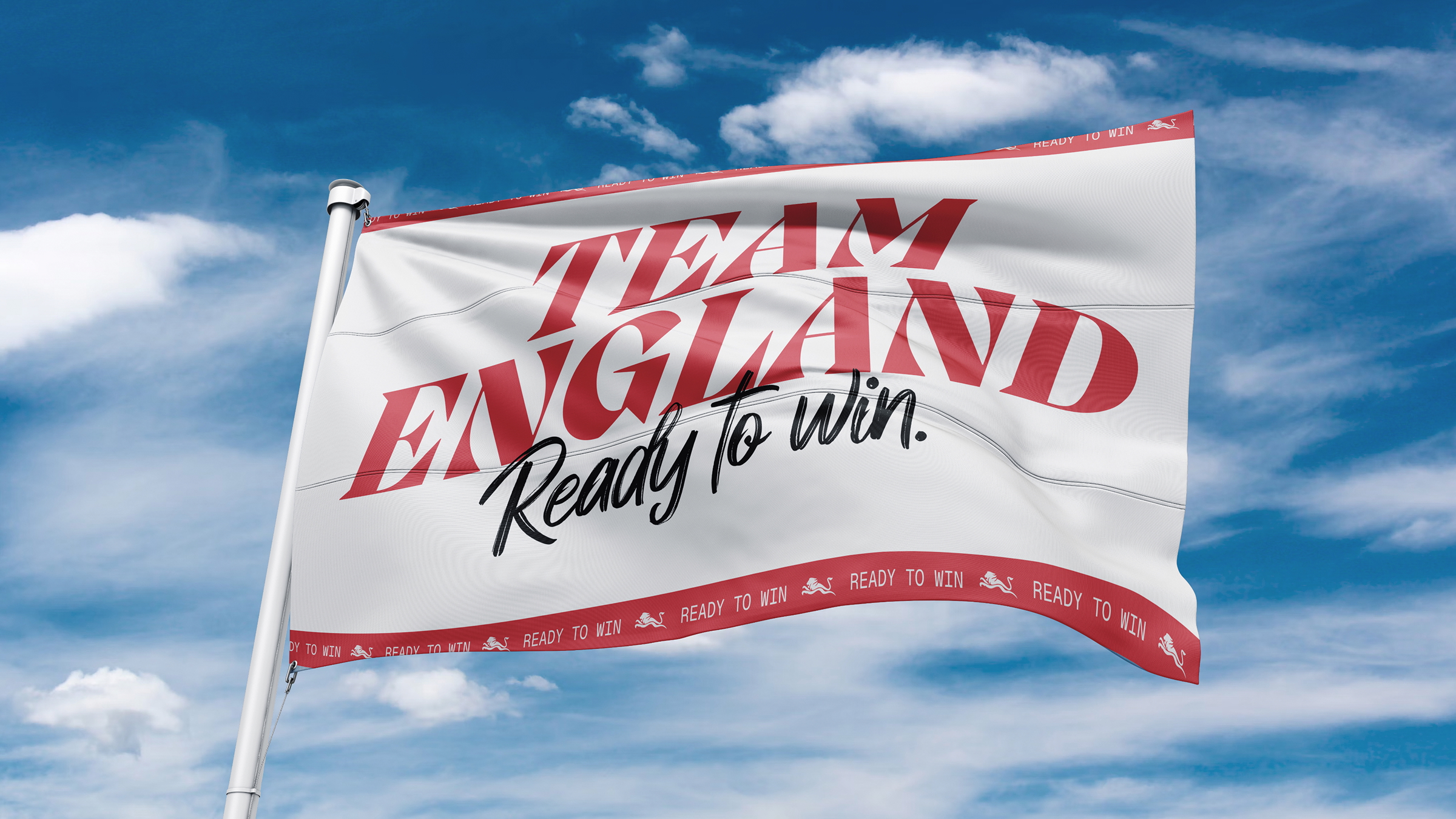
With the Glasgow 2026 Commonwealth Games on the horizon, Team England needed more than a campaign line, it needed a voice. Something that could carry across hundreds of athletes, dozens of sports, multiple host cities, and millions of fans.
The challenge wasn’t just to sound inspiring. It was to sound strong, confident and inclusive, while remaining proudly and recognisably English wherever the brand appeared, from broadcast graphics to grassroots activations.
For decades, sports branding leaned heavily on the power of the slogan: a short, motivational line designed to rally support at a specific moment. But increasingly, the strongest sports brands are moving away from fixed taglines towards flexible language systems. These are verbal identities designed to generate meaning over time.
Team England’s “Ready to Win” was conceived in this spirit.
A line that had to do more than headline
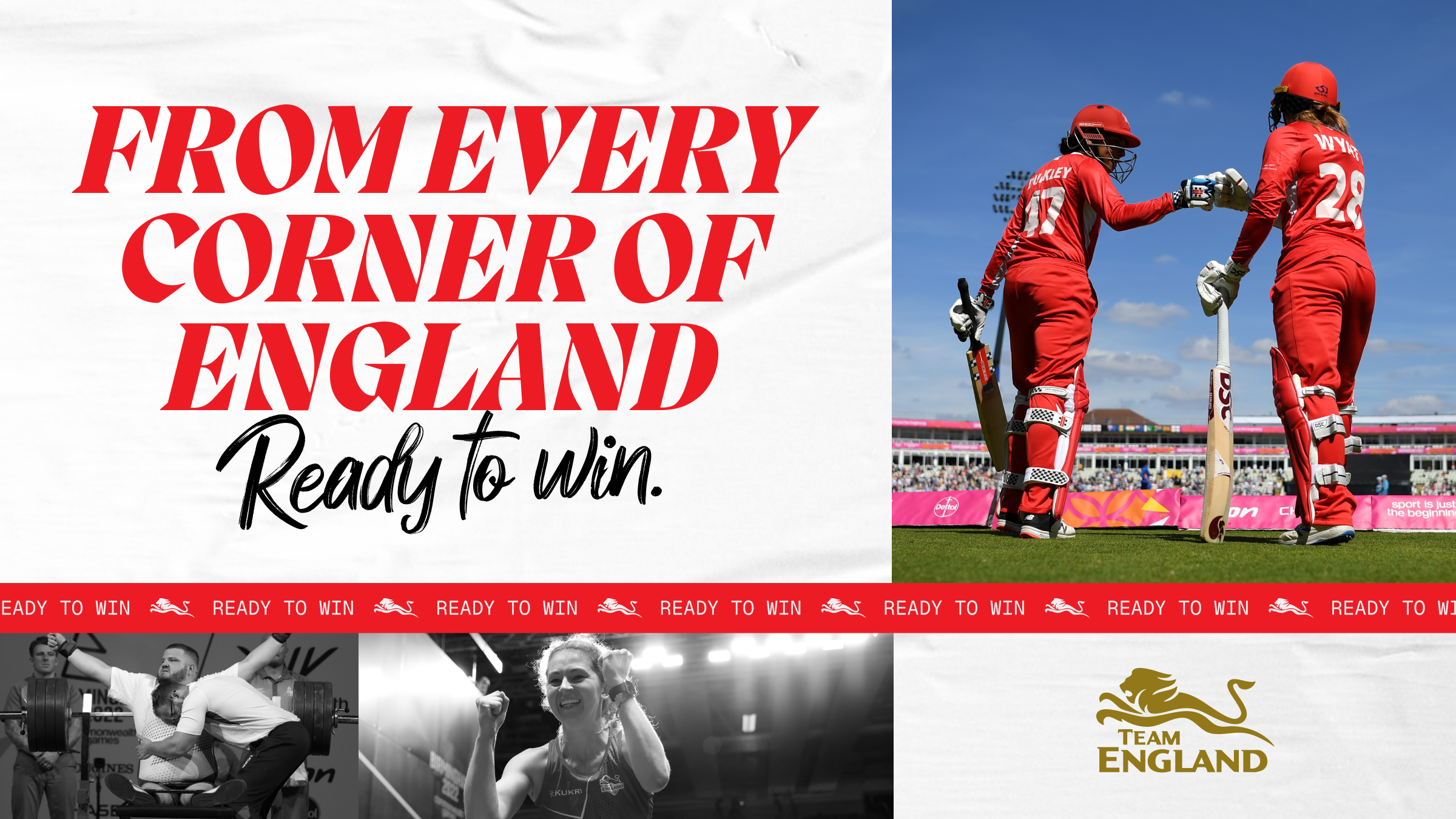
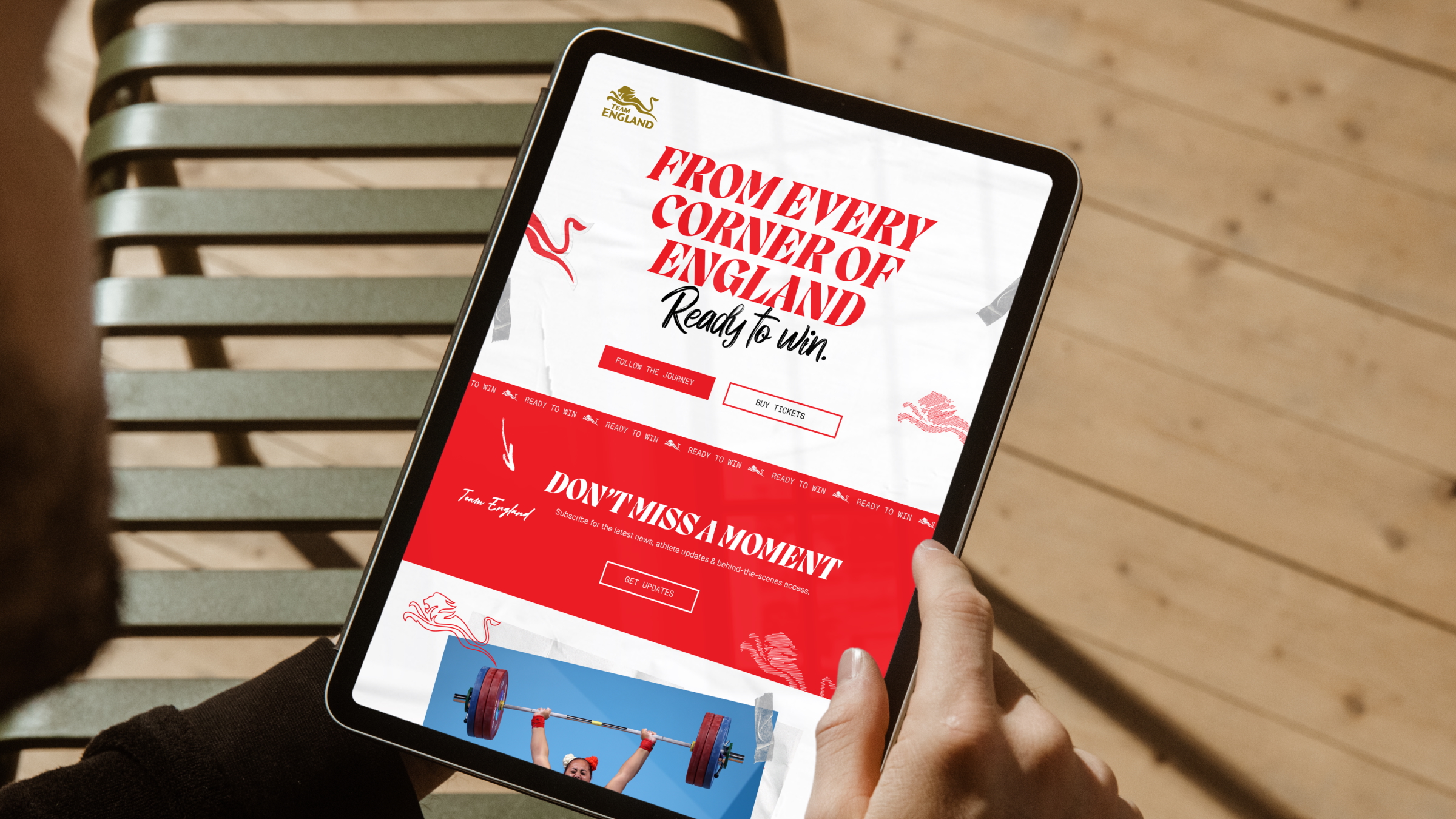
At first glance, “Ready to Win” looks like a classic rallying cry. But its role within the identity is much broader. Rather than sitting above the brand as a static campaign device, it functions as a modular phrase that can flex across contexts, sports and audiences.
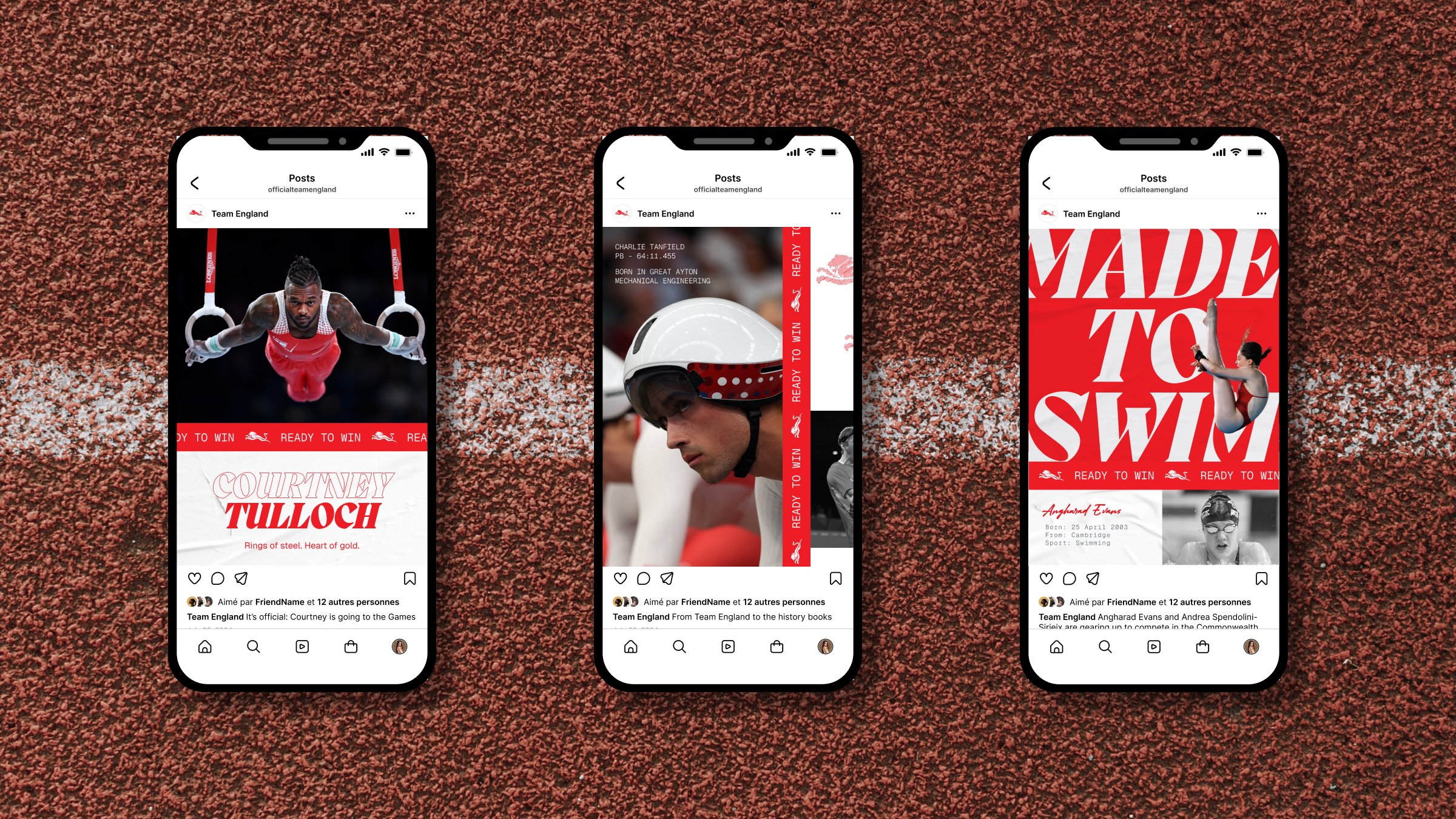
It can be personal (“Every step has led you to this moment. Ready to win.”), collective (“Together, ready to win.”), localised (“This one’s for Birmingham. Ready to win.”), or sport-specific (“From arm locks to starting blocks. Ready to win.”).
The aim was not to create one perfect sentence, but a structure capable of generating adaptable, authentic ones. This forms the foundation of how Team England’s identity is expressed.
Sport, after all, is inherently plural. A single fixed line risks flattening the diversity of athletes’ journeys and experiences. A system, by contrast, allows the brand to speak with one voice while telling many stories.
Designing for scale and unpredictability
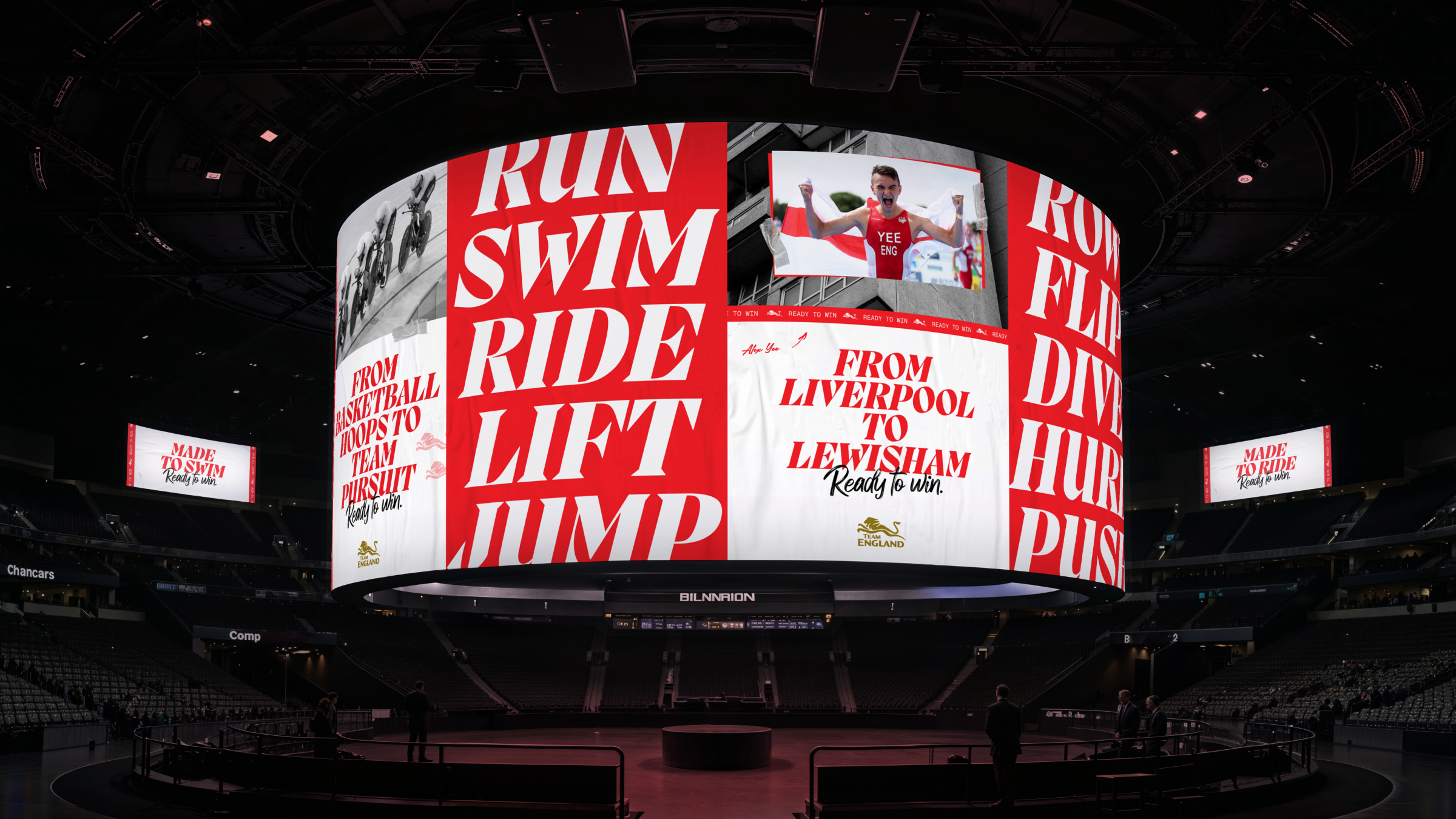
Major sporting events are chaotic communications environments. Messaging must work across social media, press, stadium signage, merchandise, athlete quotes, community programmes and partner activity. This is often produced by different teams under tight timelines.
A rigid slogan breaks under this pressure. A language framework thrives.
“Ready to Win” anchors communications while allowing freedom around it. The surrounding language gives each execution specificity, while the recurring phrase provides recognition and cohesion.
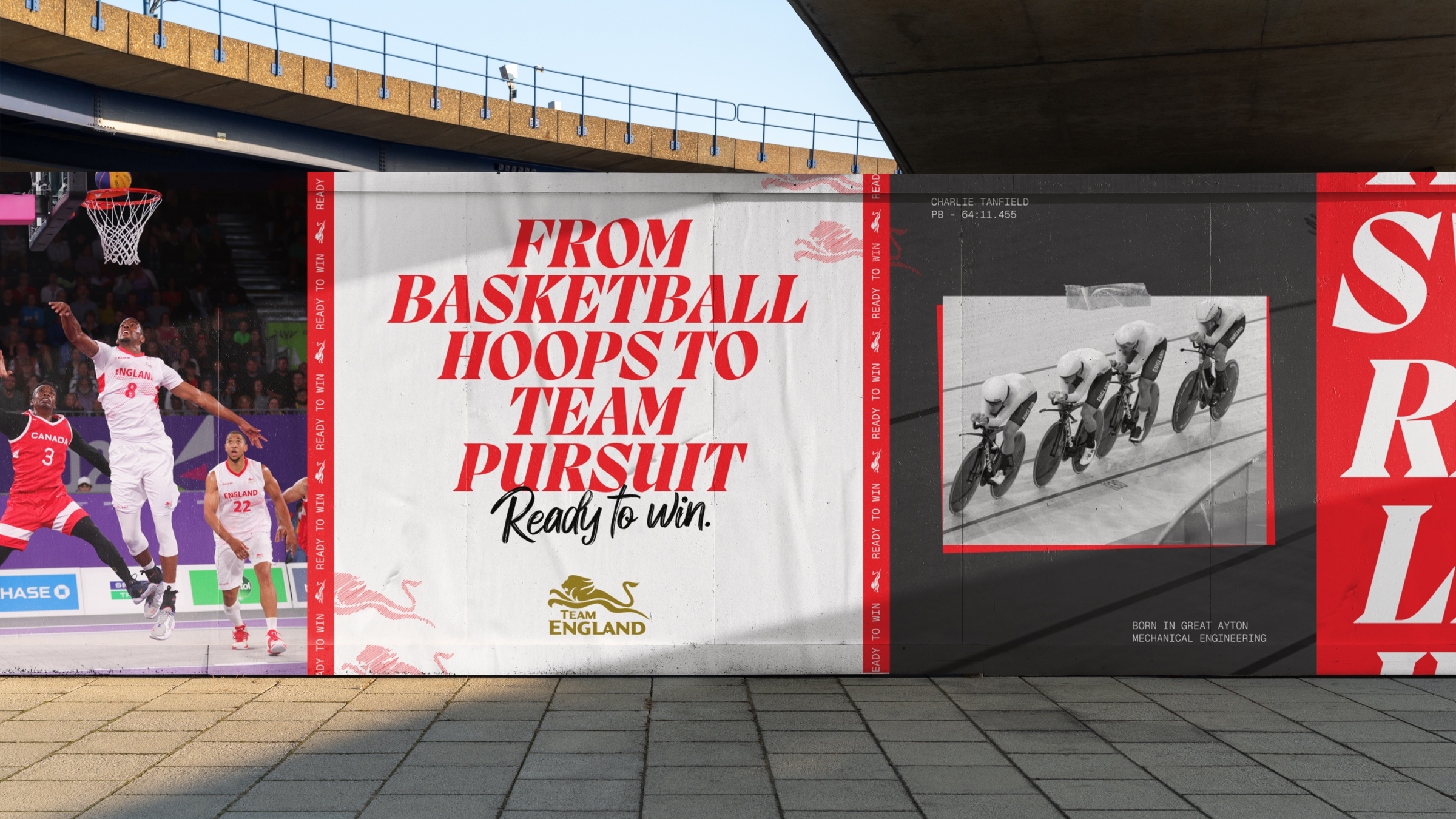
In practice, this meant developing tone-of-voice guidance that prioritised clarity, confidence and inclusivity. The voice needed to resonate with elite athletes and first-time viewers alike, without drifting into clichés or empty hyperbole.
From motivation to meaning
Another shift in contemporary sports branding is the move from pure motivation to narrative. Audiences today are less persuaded by generic calls to action and more engaged by stories of process, struggle and identity.
Language therefore needs to acknowledge the journey, not just the outcome.
Phrases like “Every stroke has led you to this moment” focus on the journey, not just the outcome. The message becomes less about inevitable victory and more about earned belief.
A voice that belongs to everyone
Team England represents athletes from vastly different disciplines, regions and backgrounds. The verbal identity had to feel owned by all of them, not imposed from above.
Flexibility made this possible. Athletes, organisers and partners can adapt the structure to their own voice without losing coherence. The system acts as a common language rather than a script.
This approach also acknowledges that fans increasingly co-create brand meaning. Social media captions, banners, homemade signs and local activations all become part of the communication ecosystem. A usable phrase is more valuable than a perfect one.
Why slogans are giving way to systems
The move from tagline to framework reflects broader changes in branding. Brands today operate in continuous conversation rather than episodic campaigns. They must respond to real-time events, multiple platforms and diverse audiences without fragmenting their identity.
Language systems provide durability in this environment. They are less about control and more about coherence, establishing principles that guide expression rather than dictating exact wording.
In sports especially, where emotion and unpredictability are central, this flexibility is essential.
A rallying cry that can evolve
“Ready to Win” was ultimately designed to endure beyond a single Games cycle. While rooted in competitive ambition, it also encapsulates the determination that unites every athlete, fan and supporter across Team England in one shared message.
In that sense, it operates less like a campaign asset and more like a verbal emblem.
As sports branding continues to evolve, the most effective voices will likely be those that can stretch, adapt and absorb new stories without losing their core meaning. Systems, not slogans, make that possible.
For Team England, readiness is not just a message. It’s a framework for how the team speaks to the world, and to itself.

BIO
Beth Andlaw is one of the cofounders of FORM. She is a brand communications director and strategist with a passion for issues-based and cause-driven campaigns that drive real change. With experience at some of London’s top communications agencies, she brings a wealth of expertise in brand strategy and crisis communications to her work. Beth believes in the power of strategic brand messaging to impact society, creating clear, resonant narratives that brands can confidently take to market. Known for her pragmatic yet optimistic approach, she works closely with clients to uncover the heart of their brand challenges, crafting future-focused directions rooted in actionable strategy.
With the Glasgow 2026 Commonwealth Games on the horizon, Team England needed more than a campaign line, it needed a voice. Something that could carry across hundreds of athletes, dozens of sports, multiple host cities, and millions of fans.
The challenge wasn’t just to sound inspiring. It was to sound strong, confident and inclusive, while remaining proudly and recognisably English wherever the brand appeared, from broadcast graphics to grassroots activations.
For decades, sports branding leaned heavily on the power of the slogan: a short, motivational line designed to rally support at a specific moment. But increasingly, the strongest sports brands are moving away from fixed taglines towards flexible language systems. These are verbal identities designed to generate meaning over time.
Team England’s “Ready to Win” was conceived in this spirit.
A line that had to do more than headline
At first glance, “Ready to Win” looks like a classic rallying cry. But its role within the identity is much broader. Rather than sitting above the brand as a static campaign device, it functions as a modular phrase that can flex across contexts, sports and audiences.
It can be personal (“Every step has led you to this moment. Ready to win.”), collective (“Together, ready to win.”), localised (“This one’s for Birmingham. Ready to win.”), or sport-specific (“From arm locks to starting blocks. Ready to win.”).
The aim was not to create one perfect sentence, but a structure capable of generating adaptable, authentic ones. This forms the foundation of how Team England’s identity is expressed.
Sport, after all, is inherently plural. A single fixed line risks flattening the diversity of athletes’ journeys and experiences. A system, by contrast, allows the brand to speak with one voice while telling many stories.
Designing for scale and unpredictability
Major sporting events are chaotic communications environments. Messaging must work across social media, press, stadium signage, merchandise, athlete quotes, community programmes and partner activity. This is often produced by different teams under tight timelines.
A rigid slogan breaks under this pressure. A language framework thrives.
“Ready to Win” anchors communications while allowing freedom around it. The surrounding language gives each execution specificity, while the recurring phrase provides recognition and cohesion.
In practice, this meant developing tone-of-voice guidance that prioritised clarity, confidence and inclusivity. The voice needed to resonate with elite athletes and first-time viewers alike, without drifting into clichés or empty hyperbole.
From motivation to meaning
Another shift in contemporary sports branding is the move from pure motivation to narrative. Audiences today are less persuaded by generic calls to action and more engaged by stories of process, struggle and identity.
Language therefore needs to acknowledge the journey, not just the outcome.
Phrases like “Every stroke has led you to this moment” focus on the journey, not just the outcome. The message becomes less about inevitable victory and more about earned belief.
A voice that belongs to everyone
Team England represents athletes from vastly different disciplines, regions and backgrounds. The verbal identity had to feel owned by all of them, not imposed from above.
Flexibility made this possible. Athletes, organisers and partners can adapt the structure to their own voice without losing coherence. The system acts as a common language rather than a script.
This approach also acknowledges that fans increasingly co-create brand meaning. Social media captions, banners, homemade signs and local activations all become part of the communication ecosystem. A usable phrase is more valuable than a perfect one.
Why slogans are giving way to systems
The move from tagline to framework reflects broader changes in branding. Brands today operate in continuous conversation rather than episodic campaigns. They must respond to real-time events, multiple platforms and diverse audiences without fragmenting their identity.
Language systems provide durability in this environment. They are less about control and more about coherence, establishing principles that guide expression rather than dictating exact wording.
In sports especially, where emotion and unpredictability are central, this flexibility is essential.
A rallying cry that can evolve
“Ready to Win” was ultimately designed to endure beyond a single Games cycle. While rooted in competitive ambition, it also encapsulates the determination that unites every athlete, fan and supporter across Team England in one shared message.
In that sense, it operates less like a campaign asset and more like a verbal emblem.
As sports branding continues to evolve, the most effective voices will likely be those that can stretch, adapt and absorb new stories without losing their core meaning. Systems, not slogans, make that possible.
For Team England, readiness is not just a message. It’s a framework for how the team speaks to the world, and to itself.
BIO
Beth Andlaw is one of the cofounders of FORM. She is a brand communications director and strategist with a passion for issues-based and cause-driven campaigns that drive real change. With experience at some of London’s top communications agencies, she brings a wealth of expertise in brand strategy and crisis communications to her work. Beth believes in the power of strategic brand messaging to impact society, creating clear, resonant narratives that brands can confidently take to market. Known for her pragmatic yet optimistic approach, she works closely with clients to uncover the heart of their brand challenges, crafting future-focused directions rooted in actionable strategy.
Further Reading



.png)


