And why you can’t teach the Fourth
Introduction
Way back when, I was part of a creative team tasked with launching a new car. Better still: the car was a pick-up truck. And in Australia, the ‘ute’ is a big deal. Big, rugged and capable, utes are to Australians what bald eagles are to Americans.

And you’re just as likely to see a ute in leafy Toorak as you are in the Outback. The former will have custom rims and full scuba gear, but they’ll both be a Hilux. What’s more, utes are the best-selling vehicles in the country. So for once, our team had a sizable budget. To put it mildly, we were excited. We couldn’t wait to challenge legends with macho names like ‘Triton’ and ‘Raptor.’ There was only one problem. The client wanted to name their brand-new ute the ‘Po-er’ Not a typo: po-er. Rhymes with 'sewer.' The to-ing and fro-ing over the name took months. The client stressed that ‘Po-er’ had ‘powerful connotations’ in their home nation. We explained that no amount of cinematic crane shots or gritty voiceover work can give authority to a vehicle whose name means ‘turd machine.’ The client stressed that ‘Po-er’ had ‘powerful connotations’ in their home nation.
And so the cycle continued. After an eternity of wrangling, we settled on a new name. A better name. The new ute would be called: ‘the ute.’
-
This experience taught me something: There’s no such thing as ‘universal’ authority.
What adds (or subtracts) authority is regional, cultural, contextual. But that doesn’t mean there’s no rhyme or reason to authority. According to legendary sociologist, Max Weber, authority comes in three types. Three mechanisms which brands can master to borrow, build, or buy credibility. And then there's a fourth type.
The kind you can't teach.
-
Charismatic Authority.
In 1985, Tommy Hilfiger was a complete unknown. He’d just launched his first menswear collection, but in the brutally-competitive world of American fashion, being unknown meant being invisible. According to conventional fashion wisdom, Tommy’s next step was to shoot square-jawed models in the Hamptons, then spend a fortune on advertising. But George Lois, the Creative Director of Tommy’s Advertising Agency had other plans. He wanted to make Tommy famous overnight. And here’s how he did it.
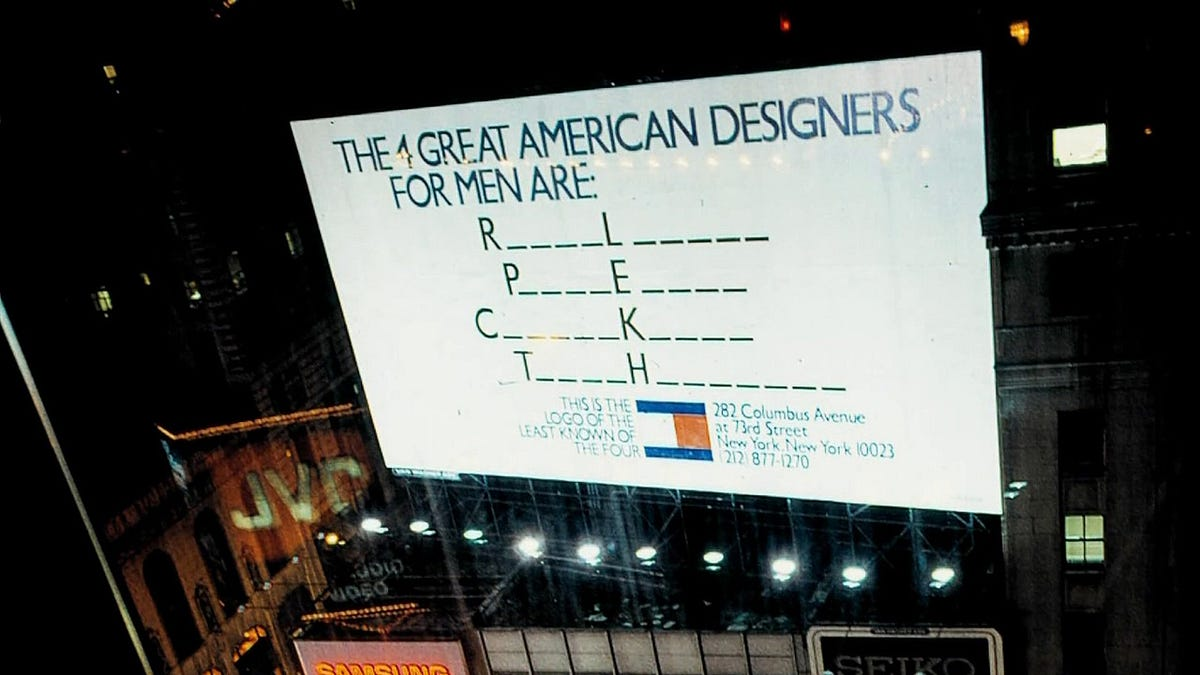
The notorious ‘hangman’ campaign ran in the most famous media space in the US. Tommy hated the campaign. The idea of placing himself alongside American fashion royalty - after designing precisely one collection - was beyond obnoxious. But Lois insisted. And overnight, the question on every New Yorkers lips was:
“Who the hell is Tommy Hilfiger?"
The campaign cost $200,000, and generated 6.5 billion dollars over the next decade. That is charismatic authority. Charisma doesn’t earn its ‘place,’ it seizes its place, with such swagger and confidence, you can’t imagine them being any-place else.
Hierarchical Authority
In the UK, there's a crest you'll see on everything from marmalade to motorcars. It's called the Royal Warrant of Appointment. And it’s the helmeted, triple-lioned definition of ‘social proof.’
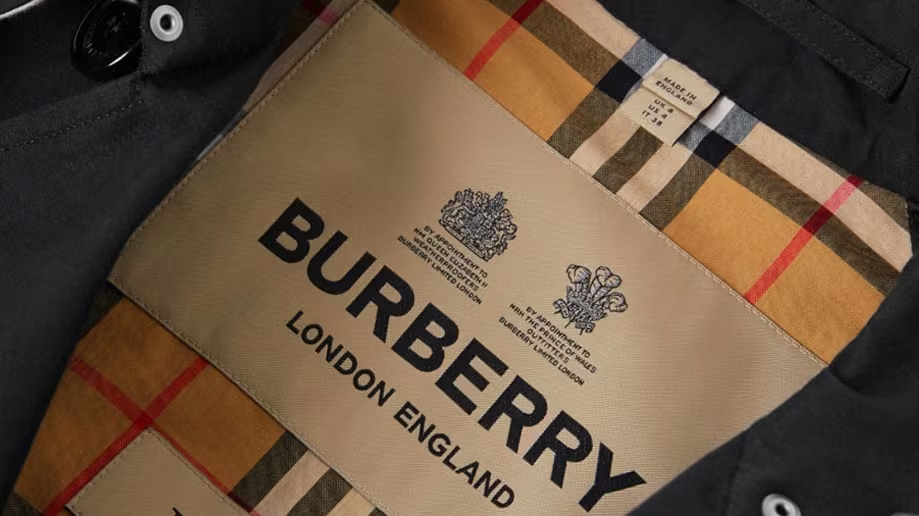
There are roughly 800 warrants in circulation; granted to everyone from Fortnum & Mason to the bloke who makes besom brooms in Somerset. To qualify for the crest, a product must have been supplied to the Royal Household for at least five out of the last seven years. But that’s neither here nor there. Because a Royal Warrant doesn’t merely say “the Queen used this.” It says:
“This was chosen by someone who could have anything. But they chose this thing.”
Research suggests Royal Warrants increase revenue by 15-30%. But here's what's interesting about hierarchical authority: it has nothing to do with quality.
Coca-Cola and Heinz hold Royal Warrants. Hierarchical authority is about proximity to power. And it only works because hierarchies (and the benefits of being associated with them) are real. It’s the only form of authority that can’t be faked, earned or dispelled. But whether you like or dislike hierarchical authority, you can’t deny its influence.
Rational Authority
In 2015, the outdoor goods store REI did something completely unexpected. They announced that they would close all 143 of their stores… on Black Friday. Not just for a few hours. All day. They'd also stop processing online orders. And they’d give all 12,000 employees a paid day off.

The goal? REI wanted people to spend less time indoors, and more time outdoors. And they chose to make this point on the most lucrative retail day of the year. The outdoor gear retailer called it #OptOutside. From a commercial standpoint, this decision was nigh on impossible to justify. REI was ‘opting’ out of the year’s biggest guaranteed windfall. Voluntarily. But here's why it worked:
REI isn’t a regular company; it’s been a ‘consumer co-op’ since 1938. And this co-op has a core principle: “A life outdoors is a life well lived.” Not because that’s their brand. But because that’s what they actually believe. Their entire business model is predicated on the idea that consumption should enable experience, not replace it. So yes, closing on Black Friday cost them millions in immediate revenue. But it proved to the world they had integrity, because they embodied this truism:
"A principle isn't a principle until it costs you."
I don't know who said that first, but REI passed that test with flying colours. And by standing on principle. By chasing their truth, not the bottom line. REI became a brand that was worthy of loyalty. And it paid off. 1.4 million people pledged to #OptOutside in year one. The campaign generated 6.7 billion media impressions. 170 organizations - including state parks and other retailers - joined them. By 2022, REI made it permanent: stores closed every Black Friday, forever. That's rational authority.
You demonstrate commitment to a principle by accepting a measurable cost to uphold it. It's not about charisma or lineage. It's about proving through action that you actually believe what you claim to believe. It's also the hardest type of authority to fake, because it requires you to actually do the thing that hurts.
-
But authority has a je ne sais quoi that defies academic analysis.
You can write case studies and build frameworks and teach MBA students how to identify moments where charismatic authority might work better than rational authority. But if you focus on the literature, you’ll miss the magic. Because there's a fourth type of authority.
The kind you can't decode or manufacture. You have to be born with it.
-
At the very beginning of my career as a Copywriter, I saw an Account Director do something so inexplicable, that I think about it (still) nearly every day.
12 years later.
Let me set the scene for you: we were in a world-famous agency in London. A legacy agency with a famous founder, thousands of creative and effectiveness awards and the most charismatic account people that side of the pond. Hierarchical, rational and charismatic authority. The agency embodied all three. But the authority that I saw that day didn’t belong to Max Weber’s three. We were in the biggest conference room in the building. It was the final meeting of a big global pitch, so the room was humming with excitement.
An animatic - the agency’s killer ‘hero film’ - is playing on the projector screen. The animatic finishes, and there’s silence. One beat. Two beats. Three beats. Then the CMO finally responds:
"I wish I could say I loved that, but I have to be honest - I'm just not sure."
I watched the GAD of the agency (our point man) ‘mirror’ the CMO. His face registered the same uncertainty; the same desire not to upset anyone. The Account Director replied:
"Since we're being honest, I'm not sure either. Shall we watch it again?"
Then - just before the animatic returned to the screen - the GAD gently placed his arm on the back of the Chief Marketing Officer’s chair. The movement was casual - almost certainly subconscious - the kind of body language that passes between life-long friends. When the film finished, the GAD piped up again:
"You know what? I actually think that film is great."
And - to my amazement - every single client agreed. Whatever the hell happened there, you can't teach that.
About Max:
Max Maclean is an award-winning Creative Director, based in Sydney, AU. As a result of his passion for problem solving (and his impressively short attention span), Max has worked in 5 different countries, made a musical, delivered a keynote at SXSW and founded a VR events company. Max publishes his ‘reckless thinking’ - about culture, tech and the media - on the WORKING THEORIES stack.
And why you can’t teach the Fourth
Introduction
Way back when, I was part of a creative team tasked with launching a new car. Better still: the car was a pick-up truck. And in Australia, the ‘ute’ is a big deal. Big, rugged and capable, utes are to Australians what bald eagles are to Americans.
And you’re just as likely to see a ute in leafy Toorak as you are in the Outback. The former will have custom rims and full scuba gear, but they’ll both be a Hilux. What’s more, utes are the best-selling vehicles in the country. So for once, our team had a sizable budget. To put it mildly, we were excited. We couldn’t wait to challenge legends with macho names like ‘Triton’ and ‘Raptor.’ There was only one problem. The client wanted to name their brand-new ute the ‘Po-er’ Not a typo: po-er. Rhymes with 'sewer.' The to-ing and fro-ing over the name took months. The client stressed that ‘Po-er’ had ‘powerful connotations’ in their home nation. We explained that no amount of cinematic crane shots or gritty voiceover work can give authority to a vehicle whose name means ‘turd machine.’ The client stressed that ‘Po-er’ had ‘powerful connotations’ in their home nation.
And so the cycle continued. After an eternity of wrangling, we settled on a new name. A better name. The new ute would be called: ‘the ute.’
-
This experience taught me something: There’s no such thing as ‘universal’ authority.
What adds (or subtracts) authority is regional, cultural, contextual. But that doesn’t mean there’s no rhyme or reason to authority. According to legendary sociologist, Max Weber, authority comes in three types. Three mechanisms which brands can master to borrow, build, or buy credibility. And then there's a fourth type.
The kind you can't teach.
-
Charismatic Authority.
In 1985, Tommy Hilfiger was a complete unknown. He’d just launched his first menswear collection, but in the brutally-competitive world of American fashion, being unknown meant being invisible. According to conventional fashion wisdom, Tommy’s next step was to shoot square-jawed models in the Hamptons, then spend a fortune on advertising. But George Lois, the Creative Director of Tommy’s Advertising Agency had other plans. He wanted to make Tommy famous overnight. And here’s how he did it.
The notorious ‘hangman’ campaign ran in the most famous media space in the US. Tommy hated the campaign. The idea of placing himself alongside American fashion royalty - after designing precisely one collection - was beyond obnoxious. But Lois insisted. And overnight, the question on every New Yorkers lips was:
“Who the hell is Tommy Hilfiger?"
The campaign cost $200,000, and generated 6.5 billion dollars over the next decade. That is charismatic authority. Charisma doesn’t earn its ‘place,’ it seizes its place, with such swagger and confidence, you can’t imagine them being any-place else.
Hierarchical Authority
In the UK, there's a crest you'll see on everything from marmalade to motorcars. It's called the Royal Warrant of Appointment. And it’s the helmeted, triple-lioned definition of ‘social proof.’
There are roughly 800 warrants in circulation; granted to everyone from Fortnum & Mason to the bloke who makes besom brooms in Somerset. To qualify for the crest, a product must have been supplied to the Royal Household for at least five out of the last seven years. But that’s neither here nor there. Because a Royal Warrant doesn’t merely say “the Queen used this.” It says:
“This was chosen by someone who could have anything. But they chose this thing.”
Research suggests Royal Warrants increase revenue by 15-30%. But here's what's interesting about hierarchical authority: it has nothing to do with quality.
Coca-Cola and Heinz hold Royal Warrants. Hierarchical authority is about proximity to power. And it only works because hierarchies (and the benefits of being associated with them) are real. It’s the only form of authority that can’t be faked, earned or dispelled. But whether you like or dislike hierarchical authority, you can’t deny its influence.
Rational Authority
In 2015, the outdoor goods store REI did something completely unexpected. They announced that they would close all 143 of their stores… on Black Friday. Not just for a few hours. All day. They'd also stop processing online orders. And they’d give all 12,000 employees a paid day off.
The goal? REI wanted people to spend less time indoors, and more time outdoors. And they chose to make this point on the most lucrative retail day of the year. The outdoor gear retailer called it #OptOutside. From a commercial standpoint, this decision was nigh on impossible to justify. REI was ‘opting’ out of the year’s biggest guaranteed windfall. Voluntarily. But here's why it worked:
REI isn’t a regular company; it’s been a ‘consumer co-op’ since 1938. And this co-op has a core principle: “A life outdoors is a life well lived.” Not because that’s their brand. But because that’s what they actually believe. Their entire business model is predicated on the idea that consumption should enable experience, not replace it. So yes, closing on Black Friday cost them millions in immediate revenue. But it proved to the world they had integrity, because they embodied this truism:
"A principle isn't a principle until it costs you."
I don't know who said that first, but REI passed that test with flying colours. And by standing on principle. By chasing their truth, not the bottom line. REI became a brand that was worthy of loyalty. And it paid off. 1.4 million people pledged to #OptOutside in year one. The campaign generated 6.7 billion media impressions. 170 organizations - including state parks and other retailers - joined them. By 2022, REI made it permanent: stores closed every Black Friday, forever. That's rational authority.
You demonstrate commitment to a principle by accepting a measurable cost to uphold it. It's not about charisma or lineage. It's about proving through action that you actually believe what you claim to believe. It's also the hardest type of authority to fake, because it requires you to actually do the thing that hurts.
-
But authority has a je ne sais quoi that defies academic analysis.
You can write case studies and build frameworks and teach MBA students how to identify moments where charismatic authority might work better than rational authority. But if you focus on the literature, you’ll miss the magic. Because there's a fourth type of authority.
The kind you can't decode or manufacture. You have to be born with it.
-
At the very beginning of my career as a Copywriter, I saw an Account Director do something so inexplicable, that I think about it (still) nearly every day.
12 years later.
Let me set the scene for you: we were in a world-famous agency in London. A legacy agency with a famous founder, thousands of creative and effectiveness awards and the most charismatic account people that side of the pond. Hierarchical, rational and charismatic authority. The agency embodied all three. But the authority that I saw that day didn’t belong to Max Weber’s three. We were in the biggest conference room in the building. It was the final meeting of a big global pitch, so the room was humming with excitement.
An animatic - the agency’s killer ‘hero film’ - is playing on the projector screen. The animatic finishes, and there’s silence. One beat. Two beats. Three beats. Then the CMO finally responds:
"I wish I could say I loved that, but I have to be honest - I'm just not sure."
I watched the GAD of the agency (our point man) ‘mirror’ the CMO. His face registered the same uncertainty; the same desire not to upset anyone. The Account Director replied:
"Since we're being honest, I'm not sure either. Shall we watch it again?"
Then - just before the animatic returned to the screen - the GAD gently placed his arm on the back of the Chief Marketing Officer’s chair. The movement was casual - almost certainly subconscious - the kind of body language that passes between life-long friends. When the film finished, the GAD piped up again:
"You know what? I actually think that film is great."
And - to my amazement - every single client agreed. Whatever the hell happened there, you can't teach that.
About Max:
Max Maclean is an award-winning Creative Director, based in Sydney, AU. As a result of his passion for problem solving (and his impressively short attention span), Max has worked in 5 different countries, made a musical, delivered a keynote at SXSW and founded a VR events company. Max publishes his ‘reckless thinking’ - about culture, tech and the media - on the WORKING THEORIES stack.